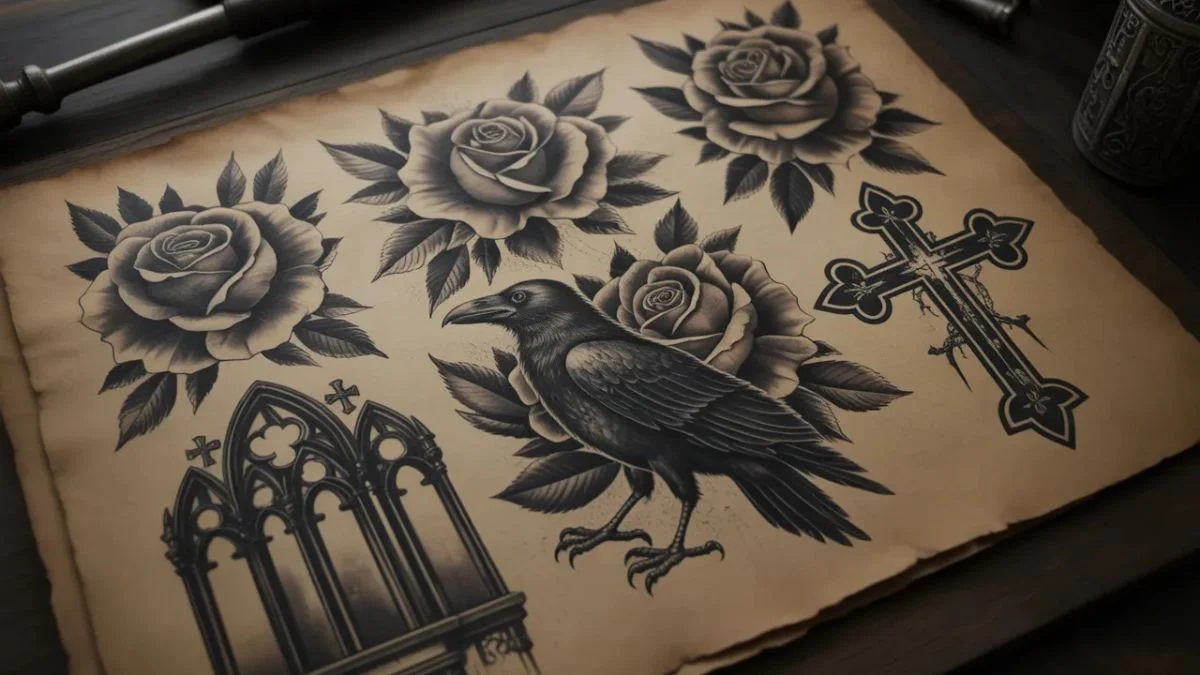
Gothic Tattoo Ideas That Go Way Beyond the Basic Skull
The world of gothic tattoo art is darker, deeper, and far more dazzling than most people realize. If your mental image of gothic ink is a plain skull on someone’s forearm, you’re seriously missing out. Today’s gothic tattoo designs have evolved into breathtaking works of wearable art — pulling inspiration from Victorian literature, medieval architecture, occult mysticism, and even haute couture.
Whether you’re a longtime goth soul or simply drawn to dark beauty, this guide walks you through the most compelling gothic tattoo ideas making waves right now. Get ready to rethink everything you thought you knew about gothic ink.
The Gothic Tattoo: More Than Just Dark Ink
A great gothic tattoo is not about shock value. It’s about atmosphere, storytelling, and an aesthetic rooted in centuries of art history. The gothic tradition stretches all the way back to the medieval period — soaring cathedrals, illuminated manuscripts, and the romance of the macabre. When that history meets the modern tattoo needle, the results are extraordinary.
Gothic tattoos represent themes like mortality, mystery, spirituality, and rebellion. They draw from Victorian mourning culture, occult symbolism, dark literature (Edgar Allan Poe, Bram Stoker), and the underground music scenes of the late 1970s. The skull is just the starting point.
The real artistry begins when tattoo artists transform these themes into blackwork masterpieces, neo-traditional compositions, detailed realism, and surrealist hybrids. Here’s a look at the designs that are redefining what gothic ink can be.
Dark Florals: When Beauty Meets Decay
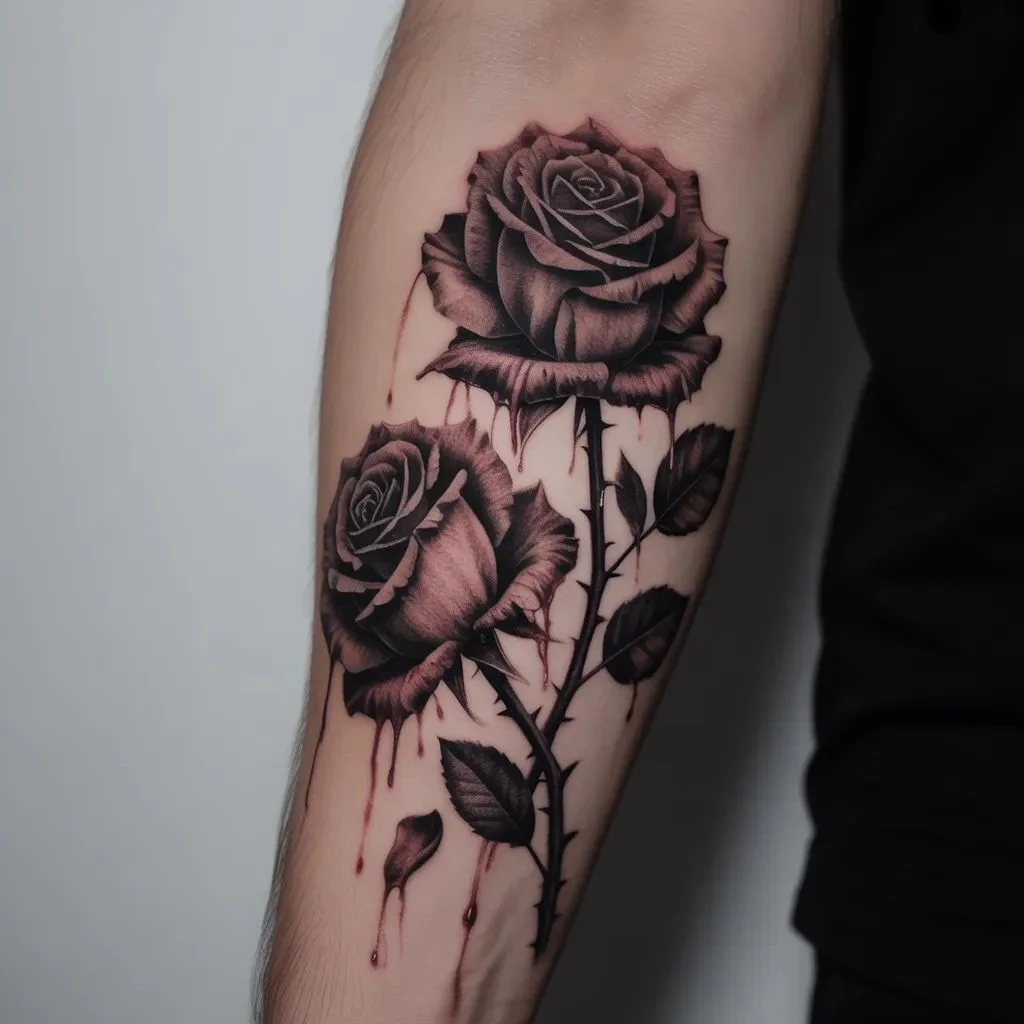
One of the most powerful directions in modern gothic tattoo art is the dark floral. These aren’t your grandmother’s roses. They’re blooms rendered in moody blacks and deep greys, with petals curling into shadow and thorns dripping with intention.
Black Roses
The black rose is the quintessential gothic floral symbol, representing eternal love shadowed by loss and mystery. Tattoo artists render these blooms with deep shading techniques that make the petals appear almost velvet-like against the skin. Popular arrangements include clusters of three to five roses with varying stages of bloom, creating visual depth and rich symbolic meaning.
Withered and Dead Flowers
Beyond roses, the dark floral category includes withered lilies, decaying peonies, and blackened daisies — each symbolizing lost innocence and faded beauty. Artists add realistic decay elements like browning edges, fallen petals, and twisted stems. When paired with gothic script or cemetery imagery, these designs hit an emotional frequency all their own.
Bleeding Roses
Bleeding roses add another layer of gothic intensity through droplets of dark ink flowing from thorn punctures. Combining these elements with skulls, crosses, or Victorian mourning jewellery creates compositions that balance haunting beauty with darkness.
Ravens, Corvids, and Gothic Birds
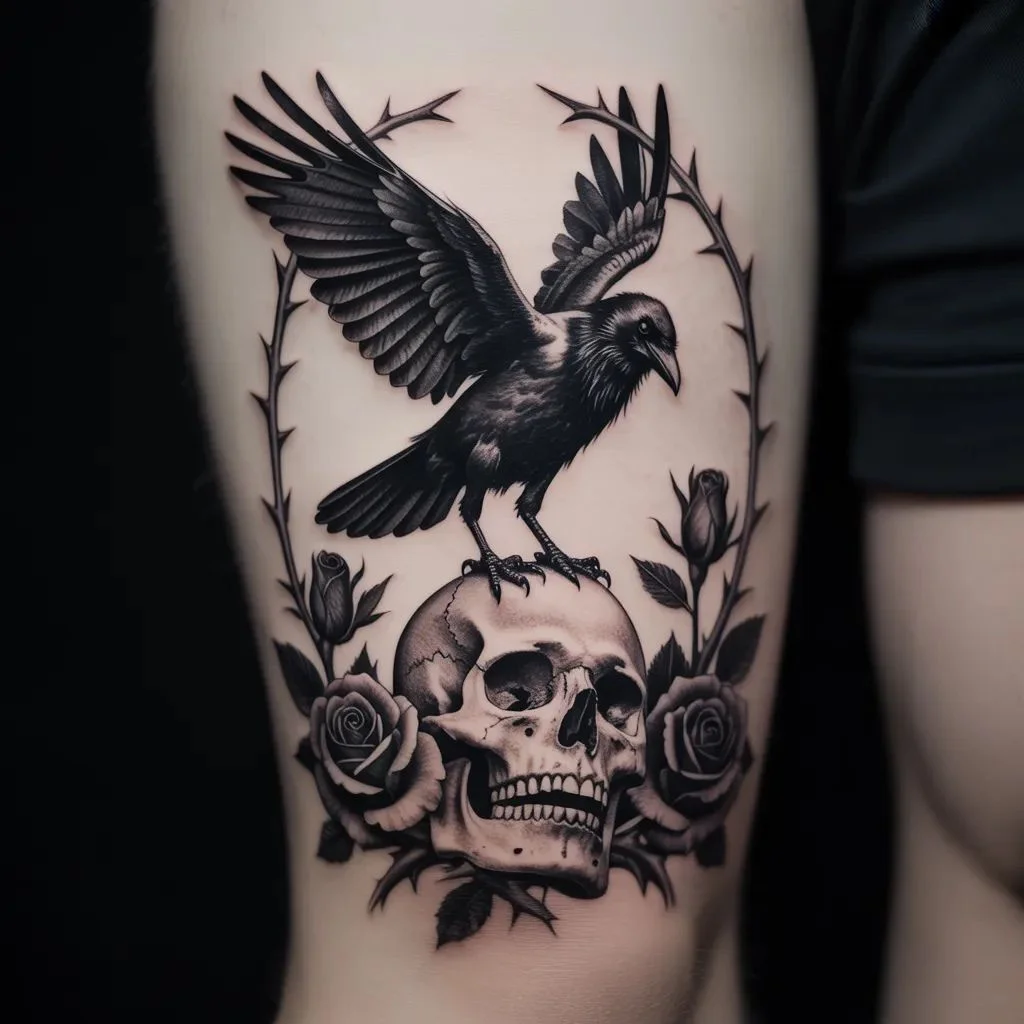
No creature belongs more naturally to a gothic tattoo than the raven. These magnificent black birds have symbolized death, prophecy, and the bridge between worlds across cultures for centuries.
Ravens are most powerfully depicted perched on gothic elements like skulls, gravestones, or thorny branches. Their ink-black plumage translates beautifully into blackwork tattoos, where detailed feather work and dramatic wing positioning create incredible movement and depth.
Beyond ravens, the corvid family — crows, blackbirds, vultures — all carry similar gothic weight. Multiple birds in flight formations or gathered around a central focal point create striking compositions for sleeves and back pieces. Their symbolism resonates deeply: wisdom, prophecy, mystery.
Gothic Architecture as Body Art
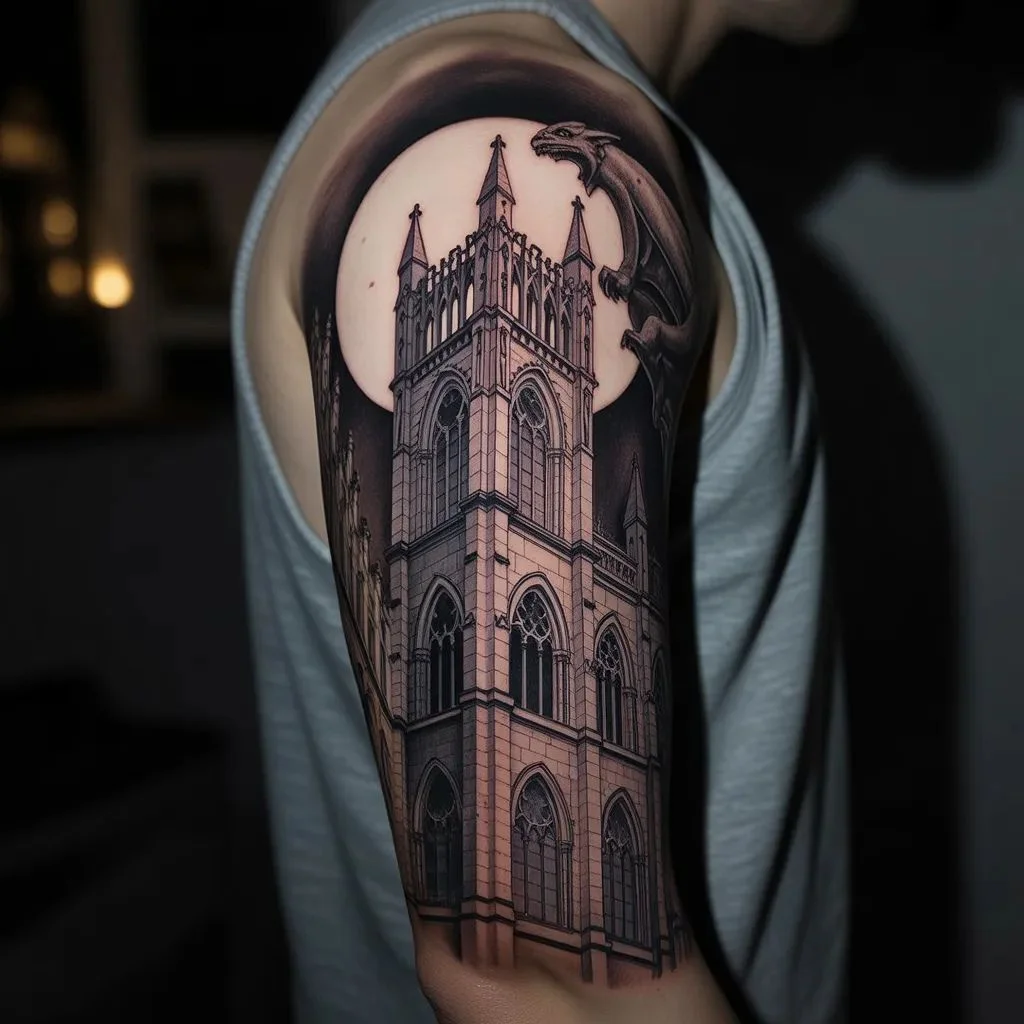
This is where gothic tattooing becomes genuinely jaw-dropping. Turning the soaring arches, ribbed vaults, and flying buttresses of medieval cathedrals into skin art requires extraordinary skill — and the results are unforgettable.
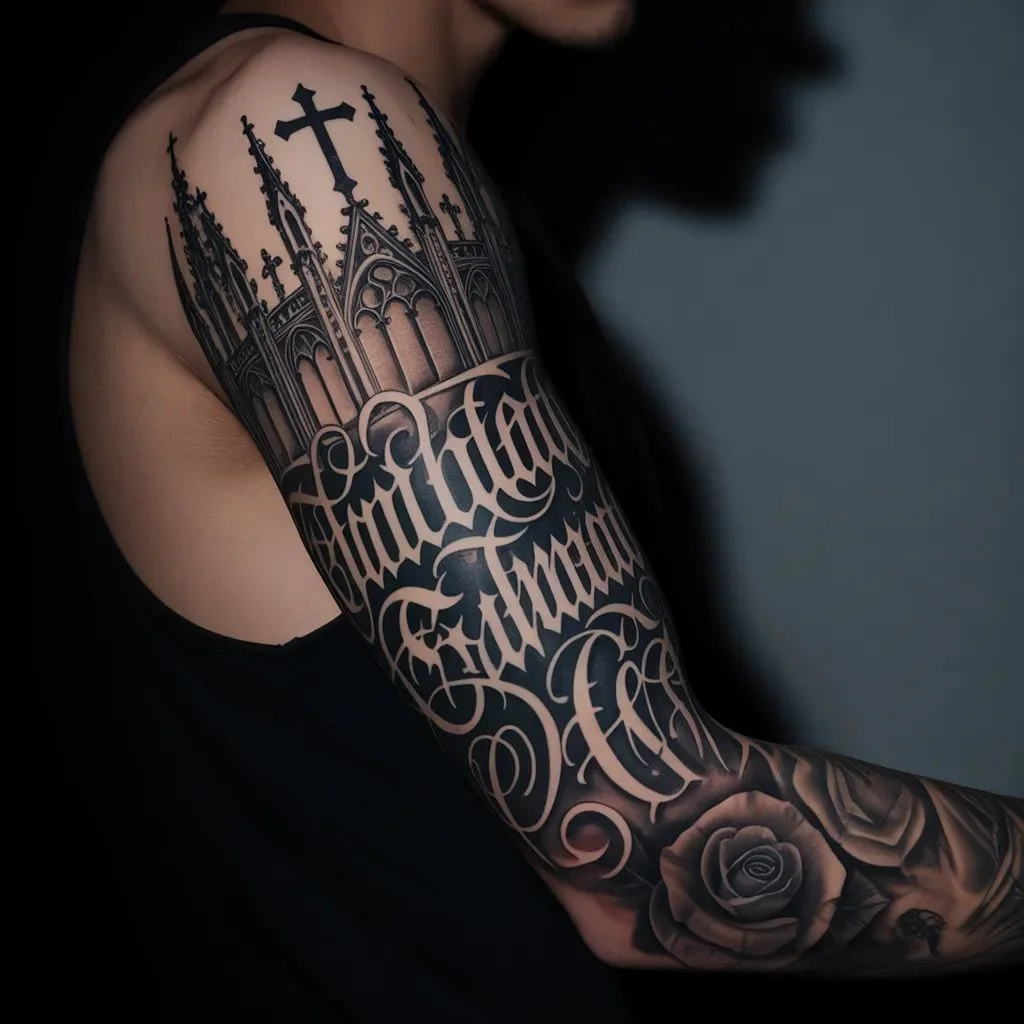
Cathedral window tattoos render the intricate tracery of stained-glass gothic arches in pure blackwork, creating the illusion of ancient stonework carved into the body. These designs are particularly powerful across the forearm, chest, or as part of a full sleeve.
Haunted castle scenes — moonlit spires, crumbling towers, fog-veiled silhouettes — work beautifully as large-scale back or thigh pieces. Gargoyle tattoos, drawn from the grotesque stone guardians of Notre-Dame and Chartres, make striking shoulder and chest designs with their architectural authority and supernatural edge.
The secret to nailing this style is working with an artist experienced in fine-line blackwork who can render structural detail without the design collapsing into a dark blob over time.
Victorian and Literary Inspirations
Victorian Gothic literature gave the world its most enduring dark archetypes — and they translate brilliantly into gothic tattoo designs.
Weeping Angels and Mourning Figures
Drawn from Victorian cemetery statuary, weeping angels make for deeply emotional tattoos. Their bowed heads and draped wings carry the weight of grief and the beauty of remembrance. These designs are exquisite in black and grey realism.
Literary Figures
Portraits and symbols drawn from Edgar Allan Poe, Bram Stoker, Mary Shelley, and Oscar Wilde give gothic tattoos a literary dimension. A raven quill dripping ink, a whale-bone corset rendered in blackwork, or a portrait of Dorian Gray fading at the edges — these designs speak to readers and dark romantics alike.
Victorian Mourning Jewellery
Victorian mourning culture produced breathtaking objects: jet-black brooches, hair lockets, black enamel rings. Tattooing these as trompe l’oeil jewellery pieces on the wrist or collarbone creates the illusion of ornamentation with deeply gothic resonance.
Occult and Mystical Symbols
The occult has always been central to gothic tattoo culture — and it extends far beyond the pentagram.
• The Ankh: The Egyptian cross of life, representing the eternal cycle of death and rebirth. A staple of early goth culture.
• Alchemical Symbols: Mercury, sulfur, and philosophical mercury rendered in ornate blackwork speak to transformation and esoteric knowledge.
• Ouroboros: The snake devouring its own tail — eternity, cyclical time, and the gothic fascination with the infinite.
• Moon Phases: A crescent moon draped with black roses or wrapped in cobwebs is deeply gothic and endlessly versatile in placement.
The key to making occult symbols work in a gothic tattoo is context. Surrounding them with ornate blackwork frames, botanical elements, or architectural detail elevates a simple symbol into a genuine statement piece.
Feminine Gothic: Lace, Filigree, and Soft Darkness
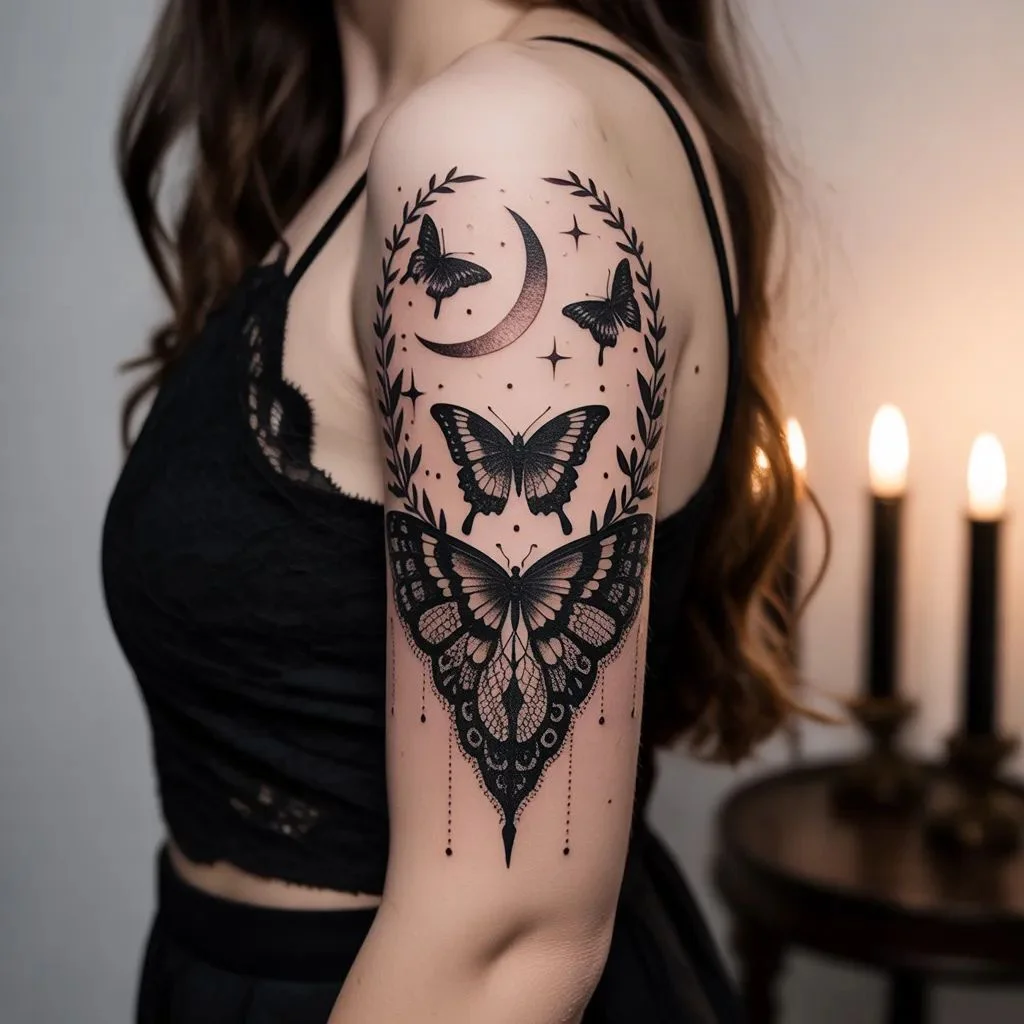
The feminine take on gothic tattoo art has become one of the most sought-after aesthetics in contemporary tattooing. It trades heaviness for intricacy, bringing in elements of Victorian lace, delicate filigree, and ornate baroque detailing.
Lace sleeve tattoos recreate the look of black lace draped over the arm, with negative space used brilliantly to mimic the open weave of fine fabric. These require an artist with exceptional control of fine lines and placement is everything.
Feminine gothic designs also incorporate dark butterflies, gothic fairies, crescent moons with floral halos, and portraits of Pre-Raphaelite women with dark eyes and flowing hair. The aesthetic embraces a soft darkness — beauty and shadow coexisting in every line.
These tattoos are particularly stunning on the thigh, ribcage, and collarbone, where the curves of the body become part of the composition.
Gothic Script and Calligraphy Tattoos
Words etched in Old English blackletter or ornate gothic calligraphy carry extraordinary visual impact. A single meaningful word rendered in well-executed gothic script becomes a standalone piece that commands attention.
Gothic script tattoos work particularly well paired with complementary imagery: a skull or cross set beneath a gothic word, or flowing letter forms that connect seamlessly with rose stems and thorns. These designs feel both refined and rebellious simultaneously.
One technical note: when planning a gothic script tattoo, ensure the letters are spaced slightly wider than feels natural. As ink settles into the skin over time, tight kerning will cause letters to bleed together, making the word unreadable within a decade. A skilled artist who works regularly with gothic lettering will know exactly how to handle this.
Choosing Your Gothic Tattoo Style
Not all gothic tattoo designs are executed the same way. Understanding the major styles helps you find the right artist and get the result you’re after.
• Blackwork: Heavy solid black ink, high contrast. Perfect for architectural elements, lace patterns, and bold symbols.
• Black and Grey Realism: Subtle gradients and photographic detail. Best for portraits, weeping angels, and detailed flora.
• Neo-Traditional: Bold outlines with modern shading, sometimes with selective colour. Great for ravens, dark florals, and literary characters.
• Dot work: Images built from tiny dots, creating a textured, almost engraved effect. Stunning for occult symbols and celestial designs.
• Surrealism: Gothic themes twisted into dreamlike compositions. Perfect for those who want truly unique, conceptual pieces.
The best gothic tattoo artists often blend multiple styles within a single piece, using blackwork for structural elements and fine-line realism for organic subjects like flowers or faces.
Best Placements for a Gothic Tattoo
Placement shapes everything about how a gothic tattoo reads. Here’s where each style of design tends to work best:
• Full Sleeve: Ideal for gothic architecture, cathedral windows, or an interconnected dark narrative. The sleeve allows storytelling across a full canvas.
• Chest and Sternum: Perfect for symmetrical compositions — two ravens flanking a gothic arch, or a weeping angel centered on the sternum.
• Back: Large-scale back pieces allow for entire haunted scenes — moonlit castles, cemetery landscapes, elaborate occult compositions.
• Forearm: Great for architectural detail, dark florals, or gothic script. Always visible and easy to show off or cover.
• Thigh: Feminine gothic designs, lace patterns, and botanical dark work thrive here, where the long canvas complements flowing compositions.
• Collarbone and Neck: Small gothic symbols, crescent moons, or a single raven feather make bold statements in these high-visibility areas.
Where Darkness Becomes Art
A gothic tattoo done right is not just dark — it’s deeply intentional. Every element, from the curve of a raven’s wing to the decay in a black rose petal, carries meaning. These designs honor a rich aesthetic tradition that stretches from medieval cathedrals to Victorian parlors to the underground music venues of the 1980s.
Whether you’re drawn to the architectural grandeur of gothic stone, the delicate intricacy of lace and filigree, or the raw symbolism of occult imagery, there is a gothic tattoo waiting to be your most powerful form of self-expression.
Recommended: Dark Gothic Nail Designs Worth Trying for Edgy Style.