Clean Ornamental Tattoo Designs Inspired by Jewellery, Architecture & Nature
Some tattoos tell stories. Clean ornamental tattoo designs do something different — they transform your skin into a surface of pure, breathtaking beauty. Rooted in centuries of decorative tradition and refined by today’s finest tattoo artists, ornamental tattooing has become one of the most sought-after styles of 2025 and 2026.
What makes this style so magnetic is its three-way conversation between the worlds of jewellery, architecture, and nature. A single design might echo the symmetry of a cathedral window, the delicacy of a filigree necklace, and the organic grace of a climbing vine — all at once, etched with flawless precision into the skin.
Whether you’re drawn to minimal elegance or intricate layered patterns, this guide covers every corner of the ornamental tattoo world: what it is, where it came from, the best design directions to explore, placement advice, and everything you need to brief your artist.
What Makes a Tattoo ‘Ornamental’?
The word ornamental comes from the Latin *ornate* — to adorn. An ornamental tattoo doesn’t represent an object or tell a literal story; it adorns the body the way a piece of jewellery does, using pattern, symmetry, and repetition to create something that feels inherently beautiful.
According to tattoo artists and studios who specialize in the style, an ornamental tattoo is defined by a decorative intent — these are designs meant to be worn like permanent jewellery on the skin. What unites the enormous range of visual traditions that fall under this umbrella — Islamic geometric art, baroque floral scrollwork, South Asian mandala jewellery, Art Nouveau botanical patterns — is the principle of adornment.
Key visual hallmarks of ornamental tattooing:
• Fine linework with varying line weight — bold outer structures softened by delicate interior detail
• Symmetry across a central axis, or radial symmetry that expands outward from a focal point
• Dot work shading that creates depth and texture without heavy solid fill
• Strategic negative space — the skin itself becomes part of the design, functioning as highlight or ‘lace holes’
• Pattern-driven composition — filigree, arabesques, mandala rings, botanical repeats, and beadwork elements
The result? A tattoo that looks as intentional and refined as the finest handcrafted jewellery — and one that, with the right artist, will stay sharp and stunning for decades.
Jewellery-Inspired Ornamental Tattoos
Of the three pillars in this guide, jewellery-inspired tattooing is perhaps the most immediately wearable. These designs don’t just reference jewellery — they mimic it, creating the illusion of bracelets, necklaces, chandelier earrings, and gemstone settings permanently draped on the skin.
Filigree & Lace Designs
Filigree — the delicate metalwork of twisted wire seen in antique rings and pendants — translates remarkably well into tattoo form. Artists render it with ultra-fine single-needle lines, building intricate open-mesh structures that catch the eye without feeling heavy. Lace-inspired patterns take the same principle and soften it further, creating a fabric-like quality with visible ‘holes’ and flowing edges.
These designs are particularly popular for feminine ornamental tattoos on the sternum, collarbone, and inner wrist, where they drape naturally with the body’s curves.
Gemstone & Chain Tattoos
More structurally bold, gem-inspired ornamental designs use shading techniques — highlights, cast shadows, and refractive effects — to create the illusion of actual stones set into the skin. Diamonds, oval cuts, and marquise shapes are frequent favorites, often anchored by delicate chain motifs that wrap around wrists and ankles like real jewelry. The approach demands strong technical skill from the artist to achieve that three-dimensional realism.
Chandelier & Collar Designs
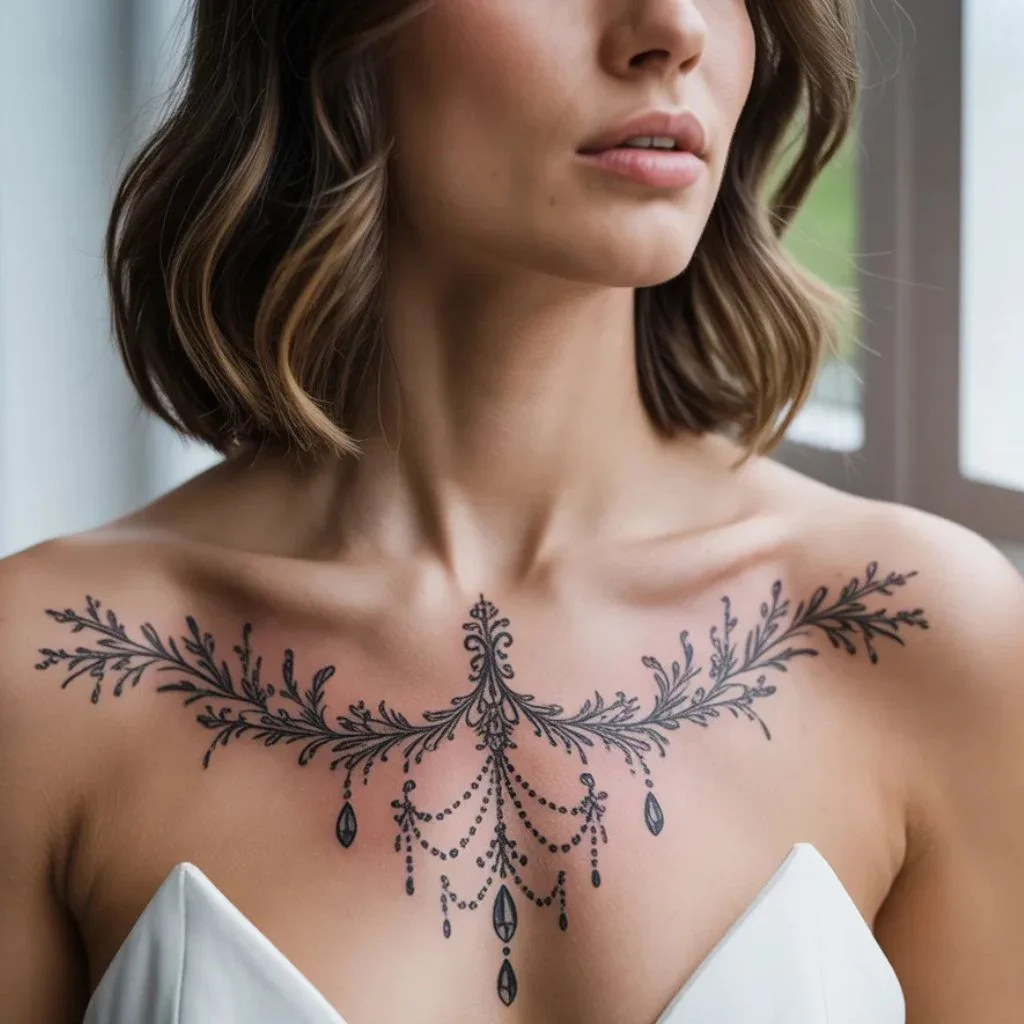
Inspired by elaborate chandelier earrings and statement necklaces, these designs radiate downward in layered tiers — perfect for collarbone and upper chest placement. They combine hanging elements, geometric connectors, and botanical accents to create something that feels simultaneously old-world and utterly contemporary.
Architecture-Inspired Ornamental Tattoos
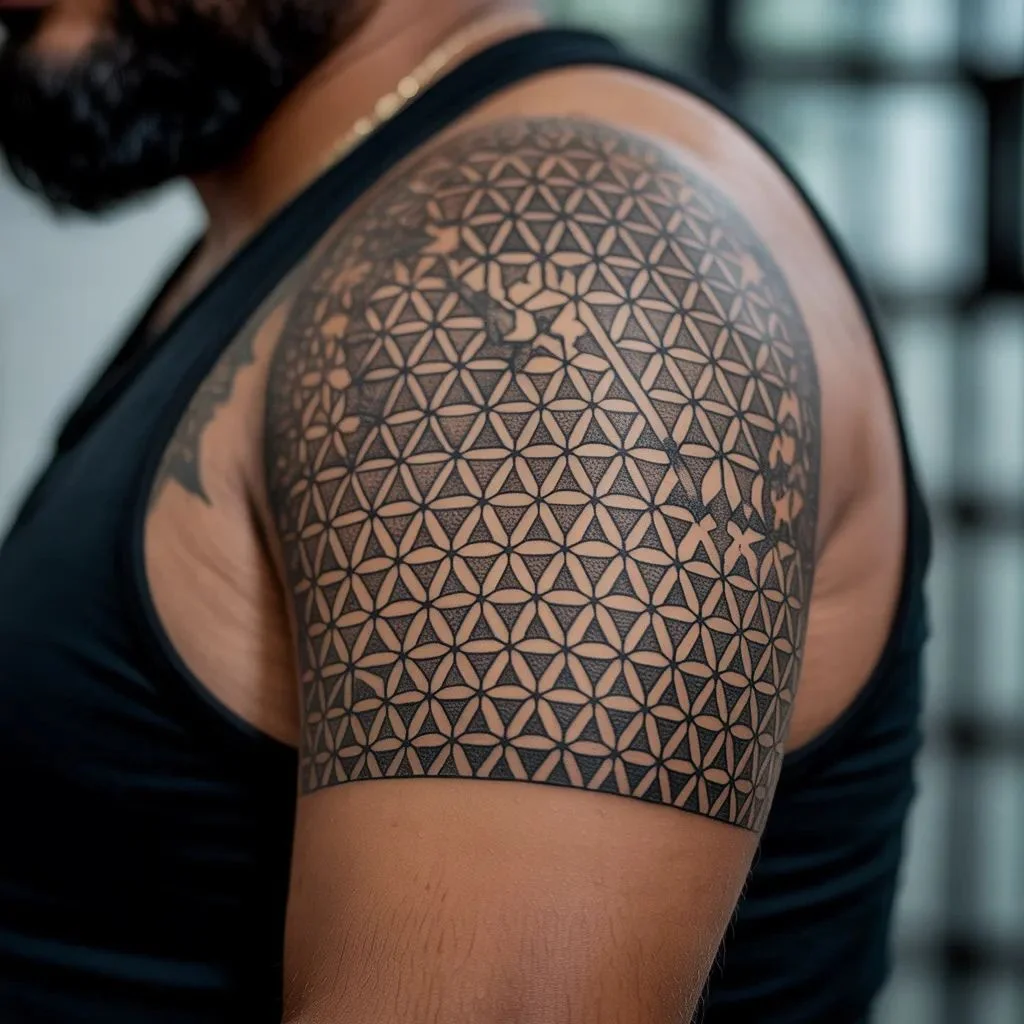
From the arched windows of Gothic cathedrals to the geometric tile work of Islamic mosques, the built world has always been one of humanity’s most spectacular ornamental achievements. Architecture-inspired clean ornamental tattoo designs bring that grandeur into intimate, personal scale.
Sacred Geometry
This is the most enduring architectural influence in ornamental tattooing. Sacred geometry encompasses the mathematical patterns — the Flower of Life, Metatron’s Cube, the Seed of Life, the Sri Yantra — those ancient cultures believed underpinned the structure of the cosmos itself. In tattoo form, these patterns are rendered in crisp, precise linework with careful use of circle intersections and geometric layering.
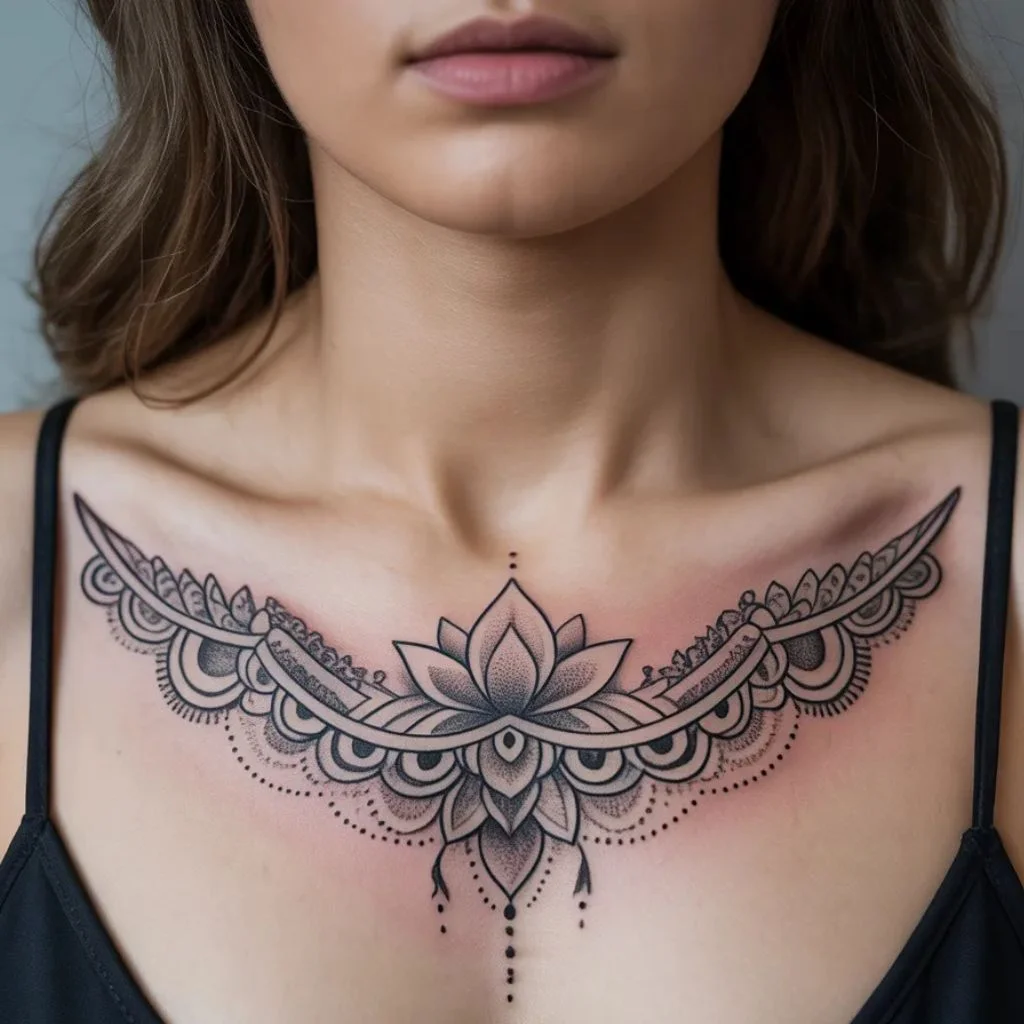
Mandala tattoos are the most recognizable expression of sacred geometry. Rooted in Hindu and Buddhist philosophical traditions, mandalas use overlapping circles and radial symmetry to reflect balance, harmony, and inner stillness. They are ideal for midline placements — sternum, spine, back — where their symmetry can fully unfold.
Gothic & Baroque Architectural Motifs
Pointed arches, rose window tracery, flying buttress silhouettes, and baroque scrollwork all lend themselves to clean, graphic tattoo interpretations. Designers and tattoo artists often simplify these motifs to their most essential lines — single-needle columns or arches that evoke Roman and Greek architecture without overcomplicating the design. The symbolism resonates deeply: stability, support, inner structure, and openness to new possibilities.
Islamic & Moorish Geometric Patterns
The geometric art of the Islamic world — tessellating stars, interlocking hexagons, repeating octagonal patterns — produces some of the most hypnotic ornamental tattoo compositions available. Rendered in blackwork or fine-line styles, these designs create a sense of infinite expansion that works beautifully on larger body areas like the back, upper arm, or thigh.
When drawing from cultural motifs like these, artists and clients alike prioritize accurate and respectful design — working with artists who understand the tradition and can render it with the care it deserves.
Nature-Inspired Ornamental Tattoos
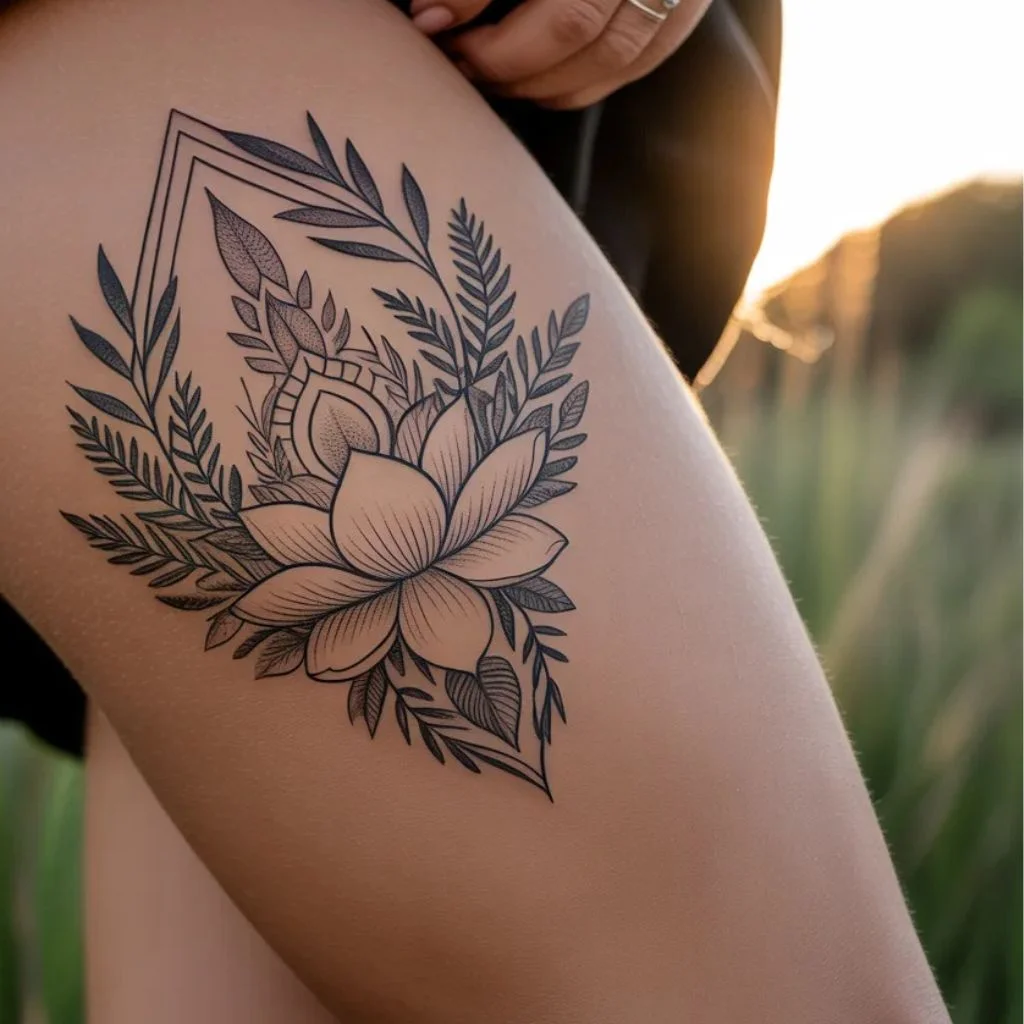
Nature has always been humanity’s greatest ornament. Flowers, leaves, vines, feathers, shells — these forms contain mathematical beauty that mirrors the sacred geometry of the built world. In ornamental tattooing, natural motifs are stylized and structured rather than simply realistic, transformed into decorative elements that feel simultaneously organic and perfectly composed.
Botanical Ornamental Designs
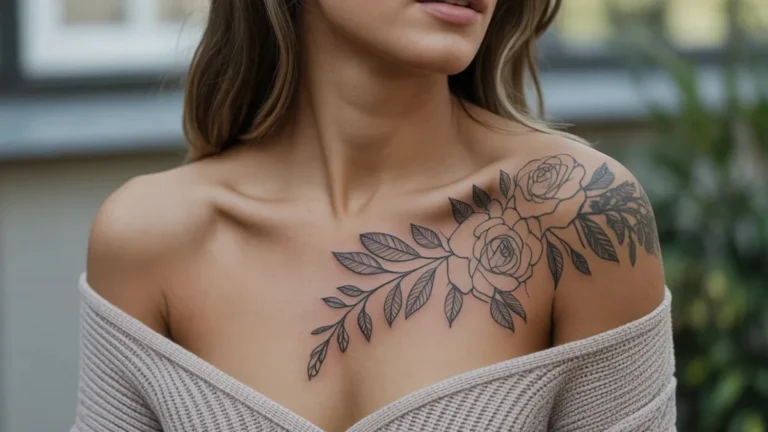
The 2025–2026 tattoo landscape has seen a deliberate shift away from simple line drawings of roses toward something richer: detailed botanical illustrations with visible structure, organic stems, and layered petals. In ornamental style, this translates to floral forms embedded within geometric frameworks — lotus blossoms at the center of mandala rings, vine tendrils used as connective tissue between geometric elements, and leaf clusters structured into repeating border patterns.
Popular choices include lotus (purity, rebirth), peonies (luxury and femininity), wildflower bunches, and ferns — each lending a different energy to the final composition.
Feather, Shell & Organic Geometry
The mathematical precision built into natural forms — the Fibonacci spiral of a nautilus shell, the perfect symmetry of a feather’s barbs, the hexagonal structure of a honeycomb — makes them ideal ornamental subjects. These designs bridge the worlds of architecture and nature elegantly, because the geometry is already there; the artist simply makes it visible.
Vine & Botanical Band Designs
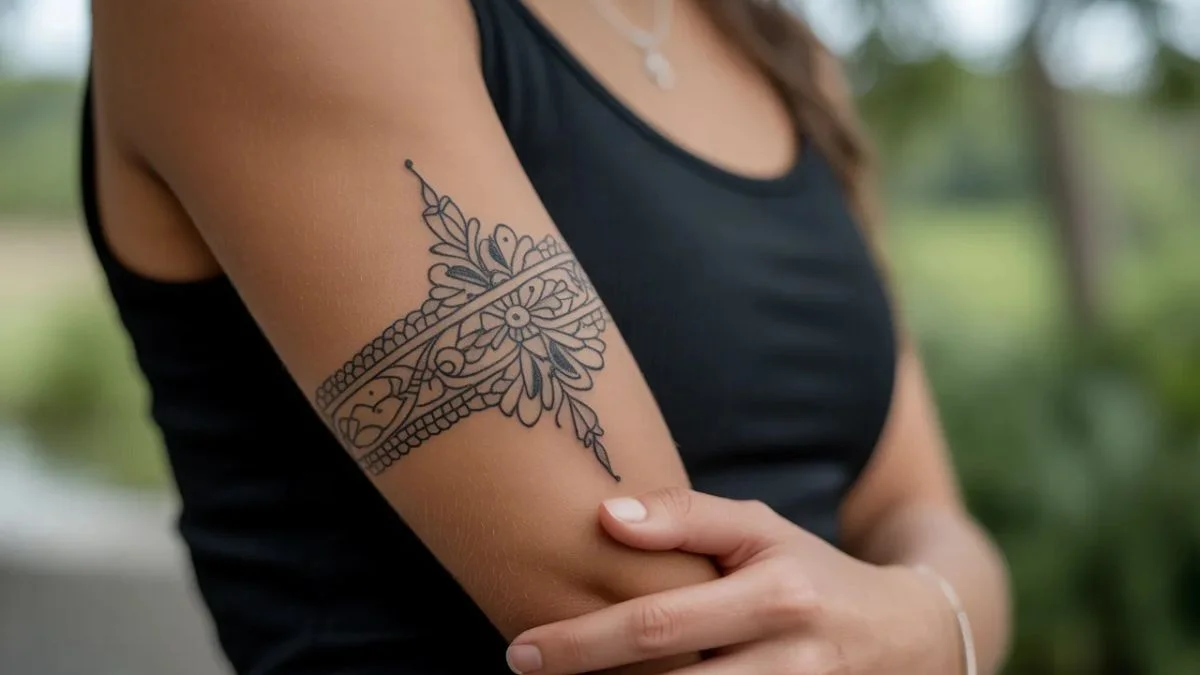
One of the most on-trend expressions of nature-inspired ornamental tattooing is the connected band — botanical vines, ornamental borders, or abstract lines that wrap around a limb or connect different parts of the body. Modern interpretations of this style are subtle and elegant, focusing on complementing the body’s natural curves. They can start small and be expanded over time, making them a smart choice for anyone building a long-term tattoo collection.
The Best Placements for Clean Ornamental Tattoo Designs
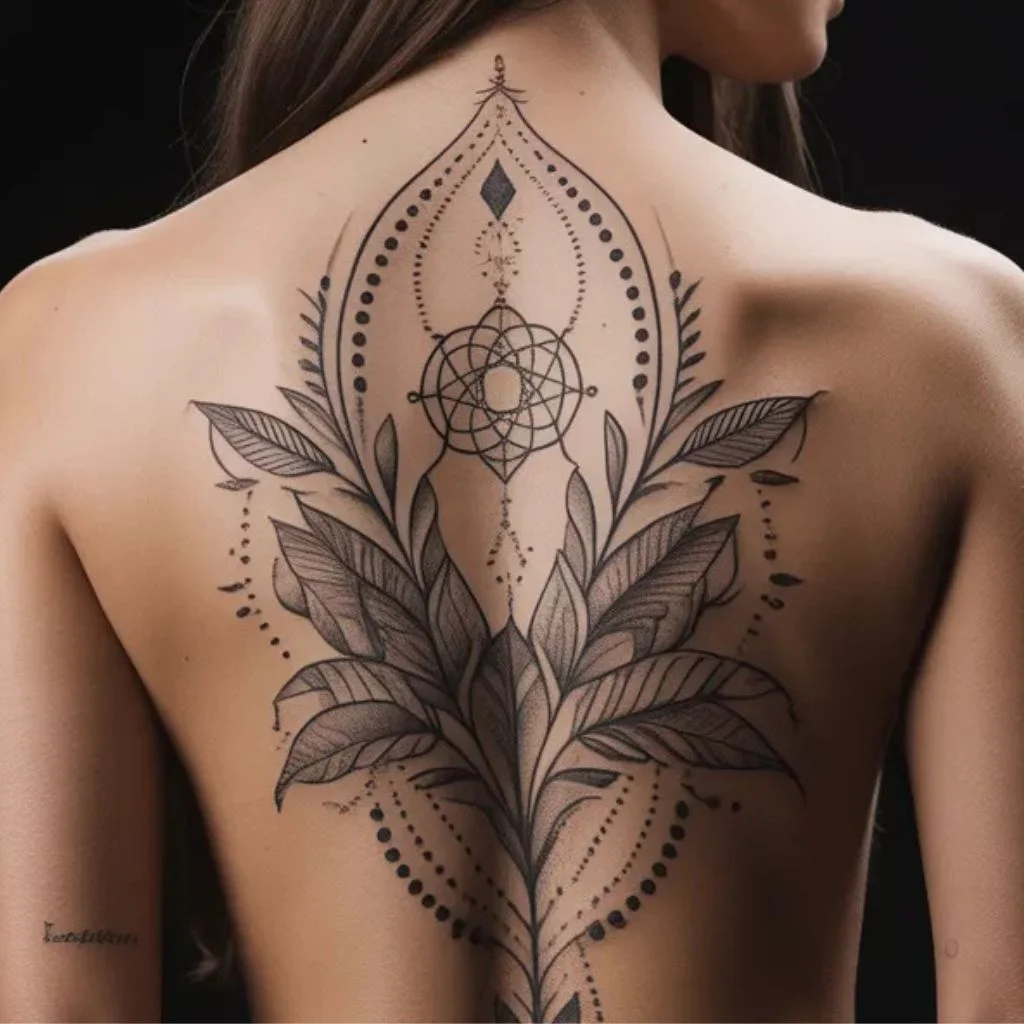
Placement is not an afterthought in ornamental tattooing — it’s part of the design. The most celebrated ornamental pieces are ones where the tattoo feels like it was made for that exact spot on the body, flowing with anatomy rather than sitting on top of it.
Here are the placements that ornamental designs thrive in, and what works best for each:
• Sternum / Chest Center — The natural home for symmetrical, feminine lace and gemstone-inspired pieces. This placement allows the design to mirror perfectly across the body’s midline and photographs beautifully with open necklines.
• Forearms & Wrists — Ideal for bracelet-style cuffs, wrapped botanical vines, and filigree band designs. Placement here benefits from constant visibility and tends to showcase intricate linework especially well.
• Collarbone — One of the most graceful placements for jewelry-inspired designs, particularly chandelier and chain-style compositions that drape naturally with the collarbone’s curve.
• Ribs & Side Body — Flows with the waistline for curved, elongated designs. Particularly effective for vertical mandala columns or botanical panel pieces that follow the body’s natural contour.
• Thighs & Calves — More surface area allows for bolder, more complex compositions: full mandala blooms, baroque repeating patterns, or sacred geometry panels.
• Spine — A dramatic, deeply personal placement for vertically oriented ornamental designs. Moon phase sequences, architectural columns, and botanical vines all work beautifully along the spine’s natural axis.
• Nape of Neck, Behind the Ear — For smaller, more intimate pieces. These ‘hidden’ placements lend ornamental tattoos an air of personal significance — decorations worn privately rather than displayed.
Regardless of placement, the key principle is the same: align the design with the body’s natural structure so it enhances rather than contradicts the body’s existing lines and curves.
Choosing the Right Style: Fine Line, Blackwork & Dotwork
Within the broad category of clean ornamental tattoo designs, there are several distinct technical approaches, each producing a different final aesthetic. Understanding these helps you brief your artist more clearly and get the result you’re imagining.
Fine Line / Single Needle
Ultra-thin lines creating complex yet airy compositions — this is jewellery-level craftsmanship in tattoo form. Fine line ornamental work creates a delicate, almost ethereal quality, especially effective for lace patterns, filigree, and botanical overlays. The trade-off: fine lines require an experienced artist and may need a touch-up after a few years, especially in high-movement areas.
Blackwork
Versatile and unapologetic, blackwork ornamental tattooing uses solid black areas, bold linework, and strong contrast to create striking geometric and mandala-based compositions. It pairs beautifully with negative space and works across placements from subtle accents to full sleeves. Blackwork tends to age better than fine line, making it a smart choice for large-scale pieces.
Dot work / Pointillism
Soft gradients and depth built from thousands of tiny dots — dot work gives ornamental pieces a textured, almost three-dimensional quality. It’s particularly beautiful in mandala and sacred geometry work, where the gradual tonal transitions add richness without the use of solid fill. Dot work and fine linework are frequently combined in contemporary ornamental tattooing for maximum versatility.
How to Brief Your Artist for an Ornamental Tattoo
The quality of your brief directly determines the quality of your final tattoo. Ornamental work requires significant custom design work from your artist, so the clearer and more specific your communication, the better the result.
Before your consultation, prepare:
• Reference images — Pinterest boards, Instagram saves, and screenshots of work you love. Focus on pieces from artists whose style genuinely appeals to you, not just designs you found attractive in passing.
• Placement decision — Know where on your body the tattoo will live and be ready to discuss how you want it to interact with that placement.
• Inspiration sources — Whether it’s a specific piece of jewellry, an architectural detail you photographed, or a botanical illustration, sharing your visual sources helps the artist understand the aesthetic language you’re drawn to.
• Style preference — Communicate whether you’re drawn to fine line, blackwork, dot work, or a combination, and whether you want a more minimal or more maximalist composition.
• Scale and growth intention — If you’re thinking about building a larger connected piece over time, share this upfront so the artist can design with future expansion in mind.
Above all, choose an artist whose existing portfolio demonstrates exactly what you want. Review healed results specifically — fresh tattoos always look sharp; healed ones reveal the true longevity of the work.
Caring for Your Ornamental Tattoo
Ornamental tattoos — particularly fine line and dot work styles — demand attentive aftercare. The intricate detail that makes these designs so beautiful also makes them the most vulnerable to poor healing.
• Keep it clean and moisturized during the healing period (2–3 weeks). Wash gently with fragrance-free soap, pat dry, and apply a thin layer of unscented moisturizer twice daily.
• Avoid tight clothing over fresh tattoos. Friction and fabric can disrupt healing in detailed areas.
• Stay out of pools, hot tubs, and open water for at least 3 weeks. Submerging a healing tattoo invites bacterial contamination and premature ink loss.
• Apply SPF 30+ religiously after full healing. UV exposure is the number one enemy of fine-line ornamental work — it accelerates fading in thin linework far faster than in heavier, bolder styles.
• Plan for touch-ups. Fine line and dotwork ornamental pieces may need a refresh after a few years to keep linework crisp and dot patterns defined. A reputable artist will advise you on realistic expectations upfront.
Where Jewellery, Architecture & Nature Converge
The most compelling thing about clean ornamental tattoo designs is how timeless they are. While tattoo trends cycle through phases of maximalism and minimalism, ornamental tattooing has endured across cultures and centuries because it speaks to something fundamental in us — the desire to make beautiful things, to adorn ourselves with beauty, and to carry that beauty everywhere we go.
Whether you’re drawn to the whisper-thin lines of a filigree cuff, the bold radial symmetry of a sacred geometry back piece, or the organic elegance of a botanical vine wrapping your forearm, there’s an ornamental design that maps precisely to your aesthetic. The key is finding the artist who can bring it to life with the precision and intention it deserves.
Take your time, build your reference collection, and trust the process. The best ornamental tattoos aren’t rushed — they’re crafted.
Our Pick: 40 Dainty Tattoo Designs for Women Who Love Minimalist Ink.