The Undone Beauty of Wavy Wolf Cuts for Modern Women
Wavy wolf cuts are the haircut for women who like their hair to look like it happened on its own. The wolf cut takes the choppy layers of a shag and the length of a mullet and softens both with waves, so the result is textured, a little wild and completely wearable. It is not a polished style, and that is the whole point — the undone finish is the look.
What makes the cut work for so many women is how it treats natural wave. Instead of fighting it, the layers follow it, so the hair moves, flicks and falls into shape without much styling at all. The eleven versions below show how wide that idea stretches, from a short curtain-bang wolf to a long silver one, and how to choose the version that fits your hair and your life.
Why Wavy Wolf Cuts Feel So Modern
A wolf cut is built from two ideas that used to belong to different haircuts: short, choppy layers on top and longer length underneath. On wavy hair, those two ideas stop fighting each other. The short layers on top give the crown volume and movement, while the longer layers below keep the length and weight, so the cut looks full at the top and soft at the ends instead of heavy all over.
It is also a cut that forgives a lot. A wolf cut grows out better than most layered cuts, because the layers are already uneven. When the shortest pieces grow, they simply join the longer ones, and the shape stays soft instead of turning into a shelf. That means fewer awkward in-between weeks and more time between appointments.
The Undone Medium Wolf Cut

Image credit: @caffeism2
This is the wolf cut in its purest form: medium-length wavy brown hair, choppy layers, wispy bangs and a finish that looks deliberately unfinished. The waves do the styling, the layers give them somewhere to go, and the whole cut reads as effortless because so little has been done to it.
Ask your stylist to cut the layers dry, or at least to check them dry. Wavy hair springs up as it dries, so layers cut while the hair is wet often end up shorter than planned, and a wolf cut needs its length to keep the shape balanced.
Copper Waves on a Shoulder-Length Wolf Cut
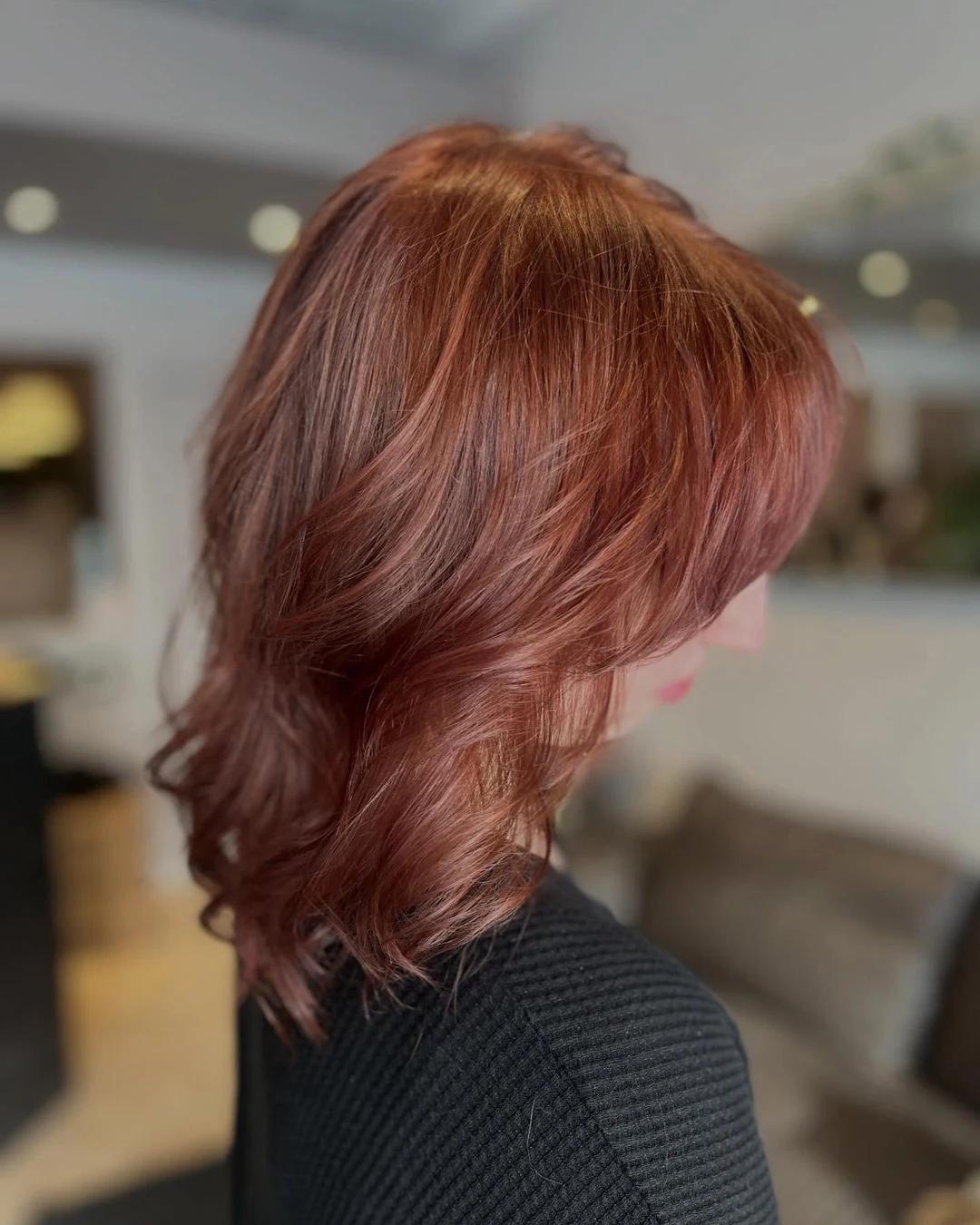
Image credit: @shannon.khairlounge
Colour changes how a wolf cut reads. This shoulder-length version in warm reddish-copper shows every layer separately, because the light catches each wave at a different angle. The back view is where the cut proves itself — the layers stack and flick out instead of lying flat, which is exactly what a wolf cut is meant to do.
Warm copper suits the cut because it adds depth to the texture. Keep copper fresh with a colour-safe shampoo and cool water. Copper fades faster than brown, and a layered cut shows fading sooner because so much of the hair’s surface is exposed.
Soft Balayage Waves From the Back
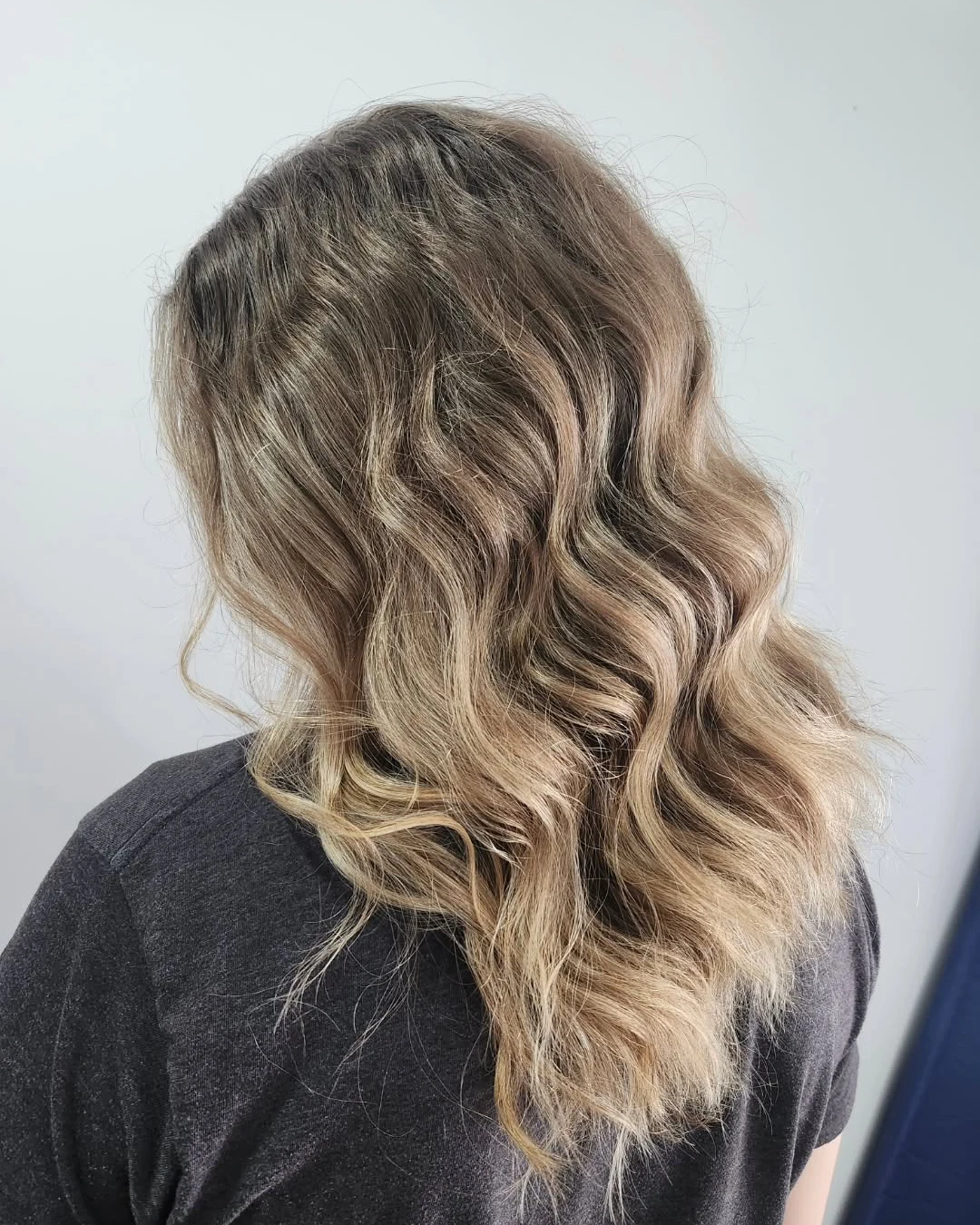
Image credit: @hairbylivjanssen
Balayage and a wolf cut are a natural pair. The hand-painted blonde runs through the waves and lightens the ends, so the layers look even more separate and the cut looks sun-kissed without a single foil line. From the back, the colour and the waves work together to make the shape look deeper than it is.
The placement matters more than the shade. Ask for the balayage to sit on the top layers and around the ends, not underneath. The pieces that show are the ones on top, so colour there gives you the most visible change and the softest grow-out when the roots come in.
The Blonde Wolf Cut With Dark Roots
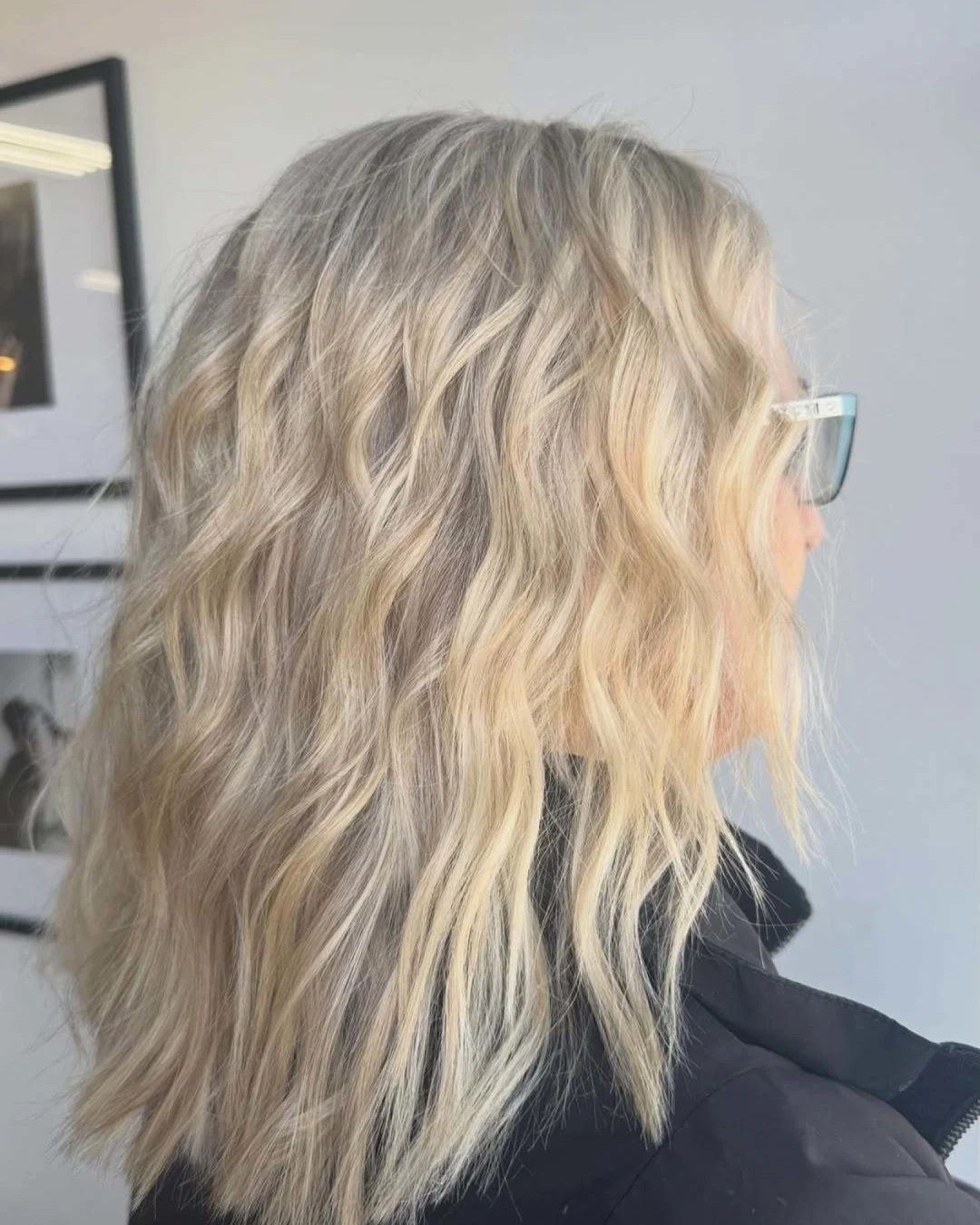
Image credit: @oyabeauty
Dark roots are not a flaw on a wolf cut — they are part of the look. This shoulder-length blonde version keeps the roots dark and lets the blonde run through the waves, so the colour has the same undone, lived-in feel as the cut itself. It is the lowest-maintenance blonde you can wear, because the grow-out is already built in.
Let the roots grow at least a few centimetres before your next appointment. A wolf cut looks better with a soft root shadow than with a hard line, and the extra weeks between appointments are the reward for choosing a colour that grows out gracefully.
The Short Wolf Cut With Curtain Bangs

Image credit: @hikari.oo24
Short is where a wolf cut feels lightest. This shoulder-length dark version pairs the choppy layers with curtain bangs that part in the middle and blend into the face-framing pieces, so the whole cut feels soft rather than sharp. It is a good choice if you want the wolf cut’s texture without its edge.
Curtain bangs are the easiest fringe to live with on a wolf cut. Curtain bangs grow out into face-framing layers, not into your eyes. That means you can skip a trim for weeks and the cut still looks deliberate, which is not true of a straight-across fringe.
Long Layers With Highlights and Bangs
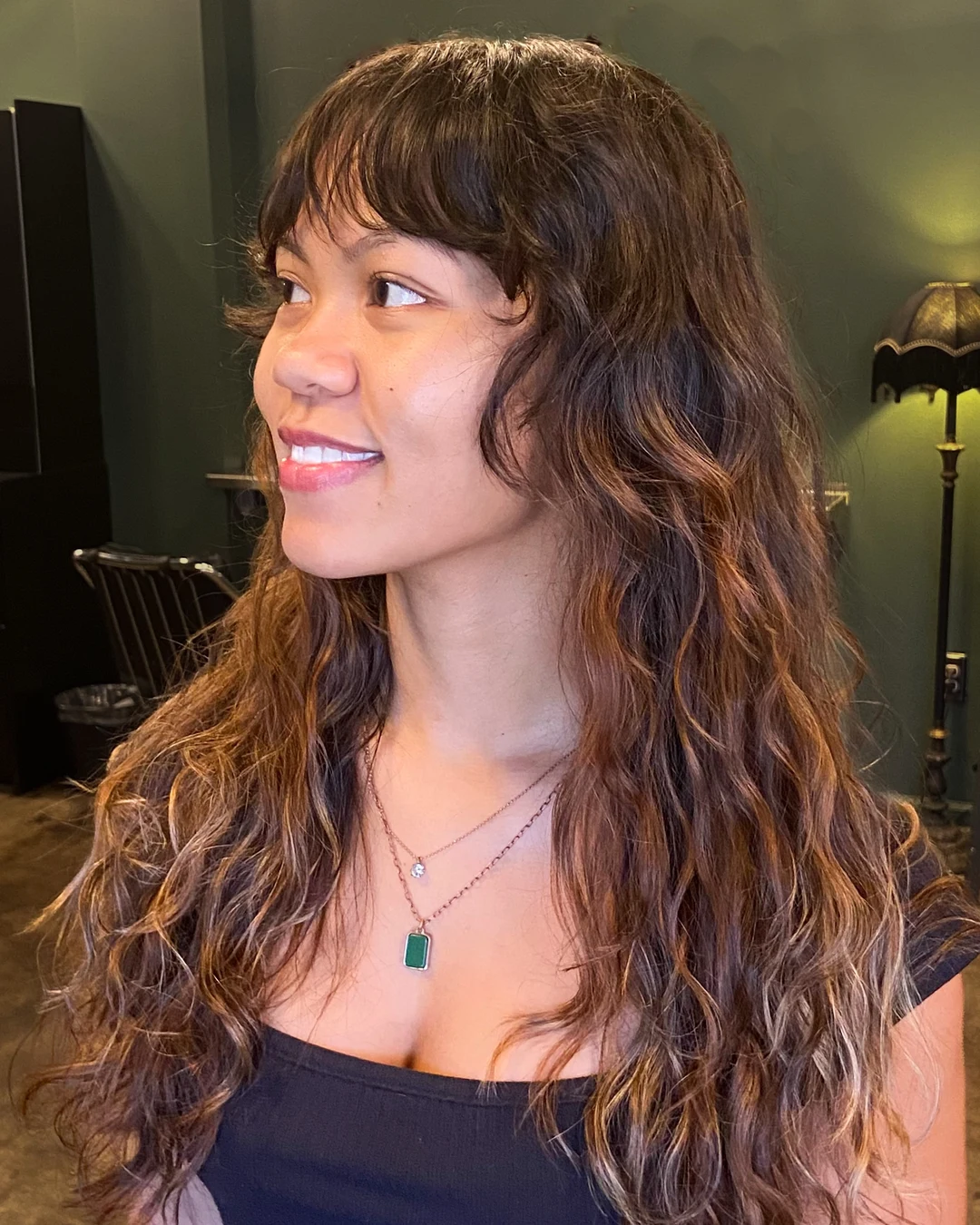
Image credit: @sarahannworden
You do not have to cut your hair short to wear a wolf cut. This long version keeps the length and adds highlights and bangs, so the hair still moves and the face still gets framed. The layers are longer and softer here, which makes it the gentlest version of the cut — and the easiest one to grow out if you change your mind.
Long layers work best when they start at the right place. Ask for the shortest layer to start at the cheekbones, not the chin. Starting higher gives the bangs something to blend into, and it keeps the face-framing pieces from hanging too low and dragging the cut down.
Wispy Bangs on a Medium Wolf Cut
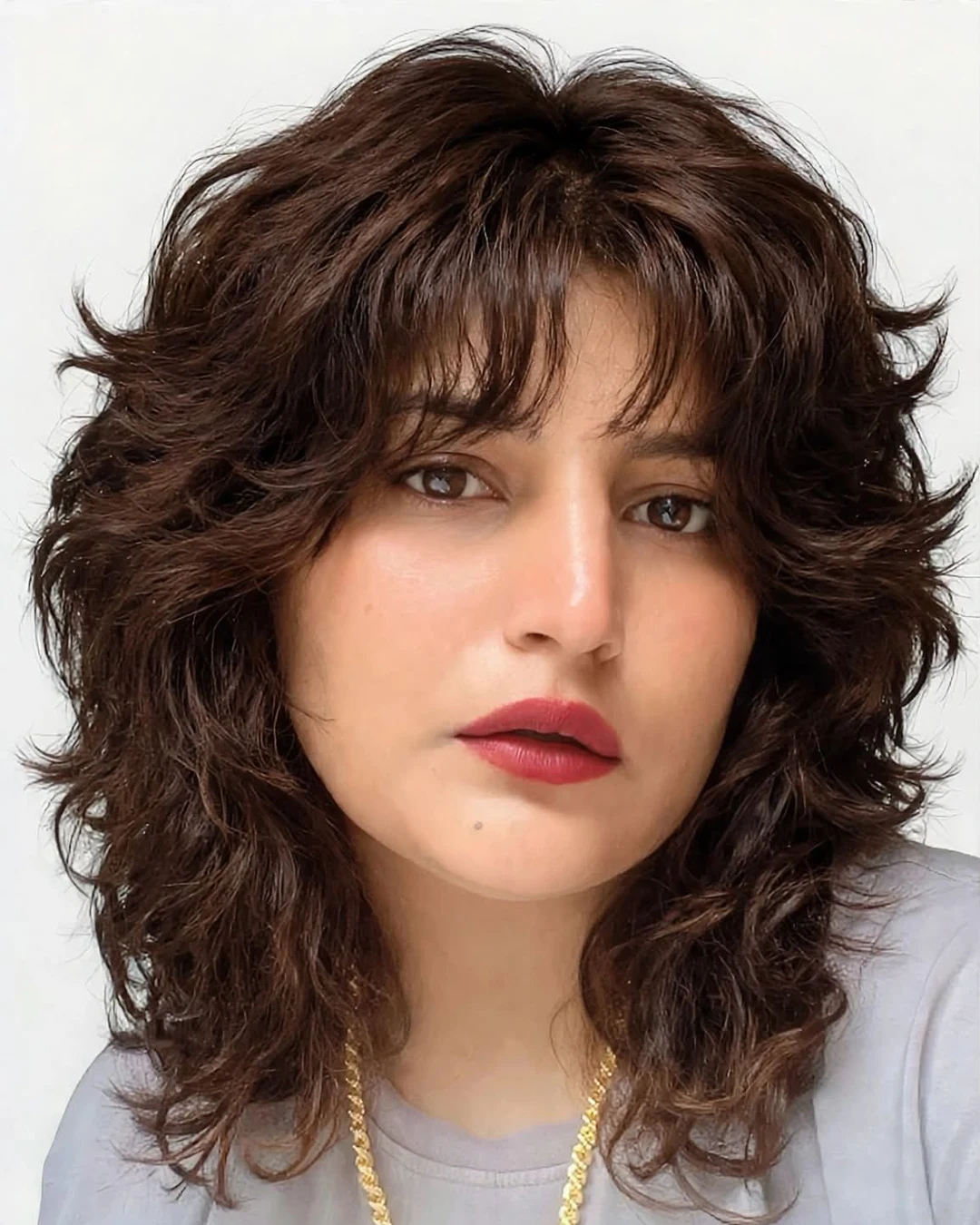
Image credit: @iluvpreetk_tattoo_artist
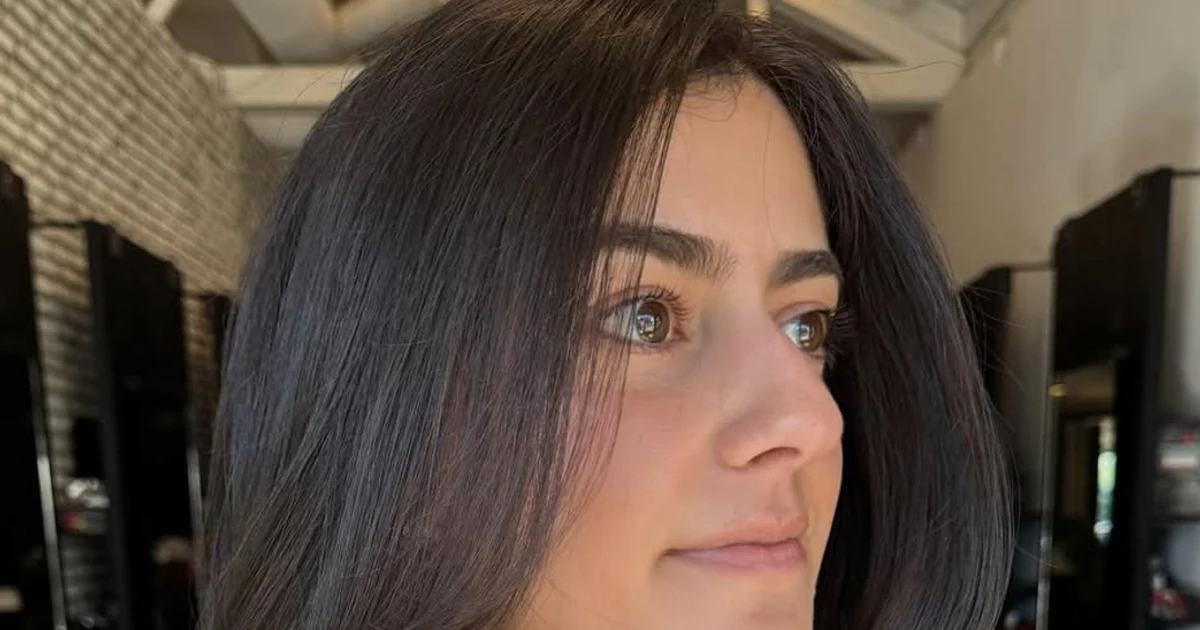
Wispy bangs are the softest way into a fringe on a wolf cut. Here they sit light and feathery across the forehead on a medium dark wavy cut, so the face stays open and the texture stays the star. It is a good pick if you have always liked the idea of bangs but worried they would feel too heavy with all those layers.
The trick with wispy bangs is keeping them thin. Ask your stylist to cut the bangs from a shallow section, not a deep one. A shallow section means fewer hairs in the fringe, so it stays airy instead of turning into a solid curtain the moment it grows.
The Wolf Cut in Profile
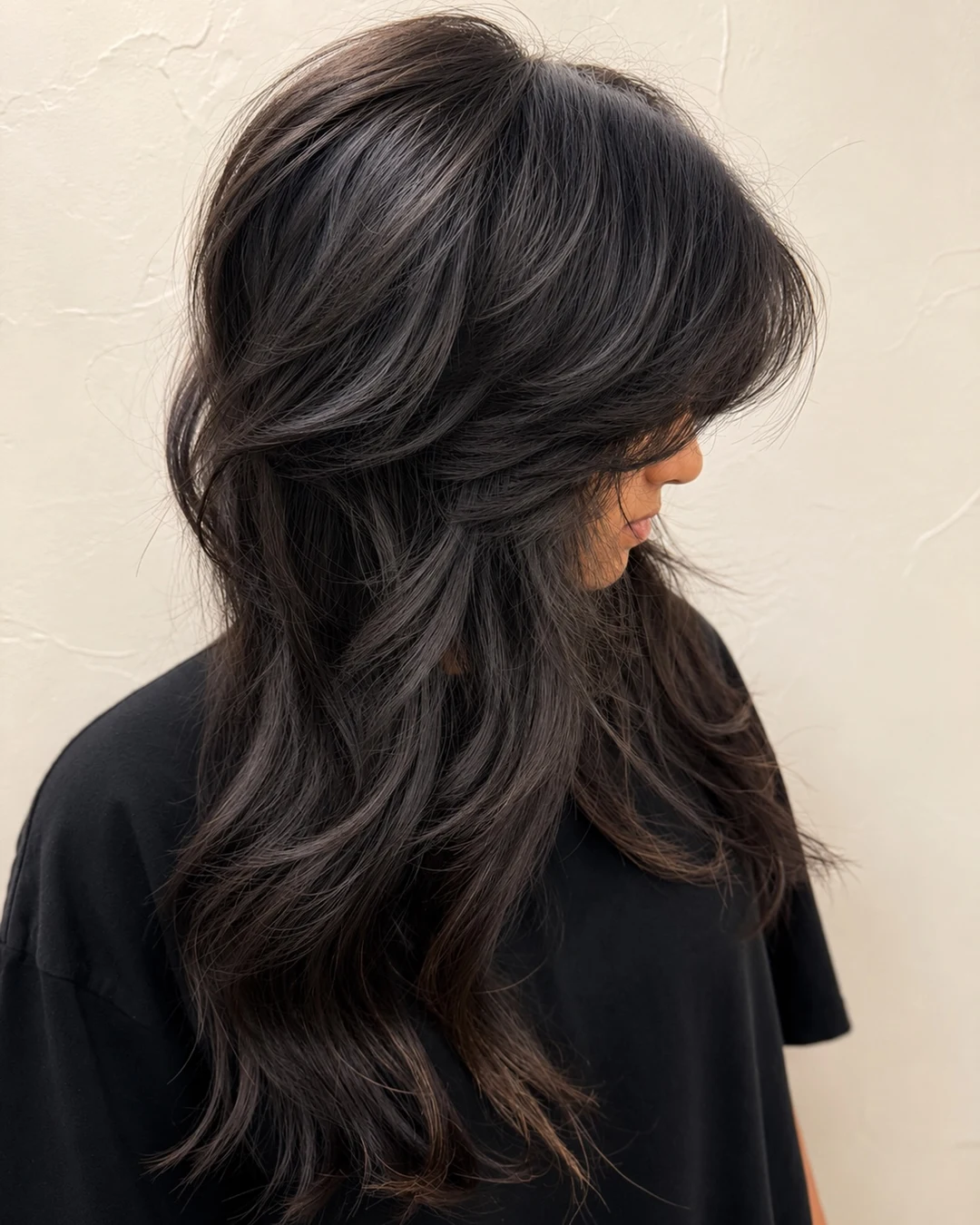
Image credit: @theboutiquebeautyshop
A side view shows what a wolf cut really is: layers stacking on each other from the crown down, each one a little shorter than the one below it. This long dark version, seen in profile, has soft waves that build volume through the back, so the shape reads clearly from every angle and the ends flick out instead of hanging straight.
The profile is also the best way to check a cut before you leave the salon. Look at the back and the sides in a hand mirror, not just the front. A wolf cut lives in its layers, and if the back is flat while the front is textured, the cut will never feel balanced from behind.
Straight Bangs on a Long Wolf Cut
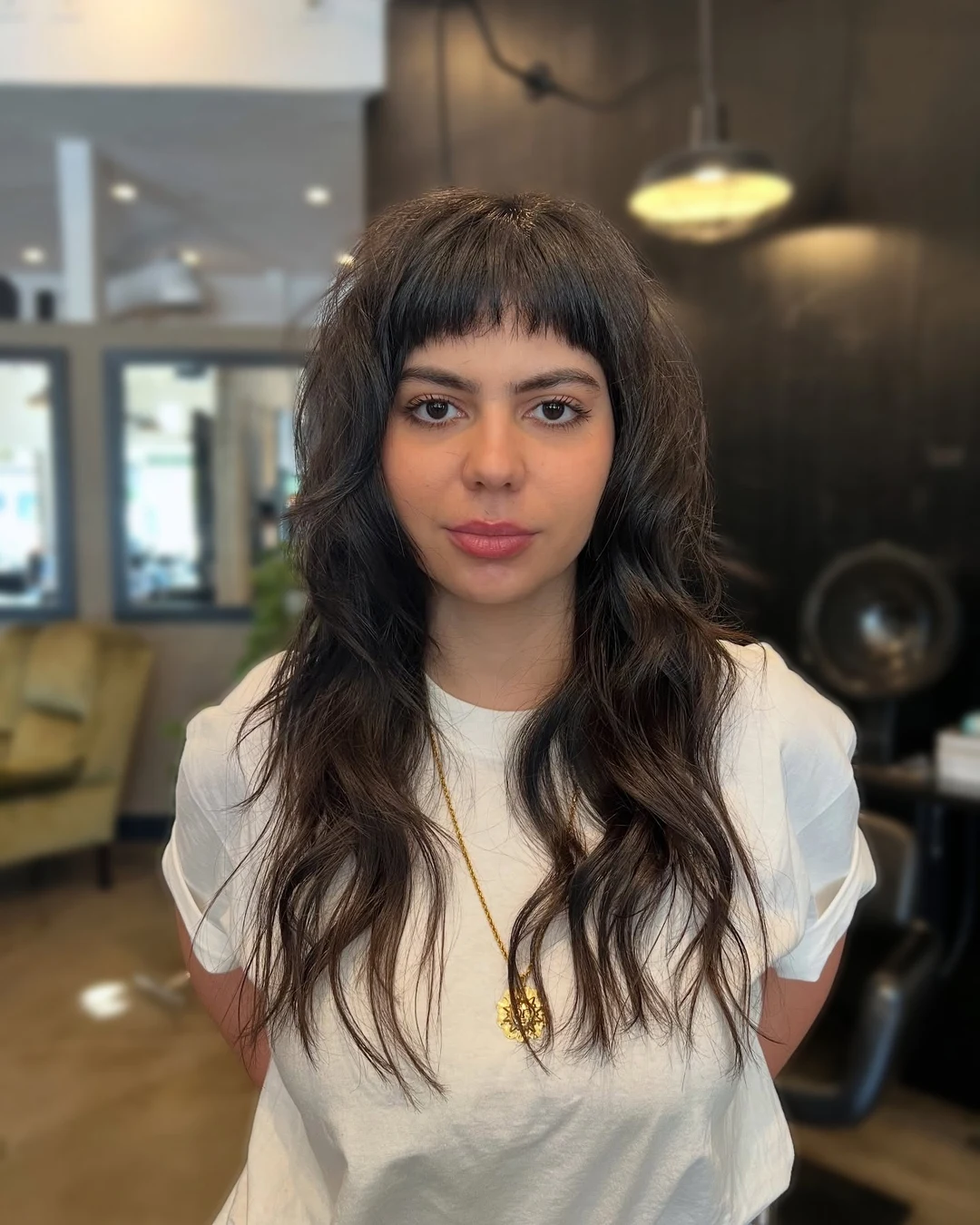
Image credit: @societysalons
Straight bangs give a wolf cut its anchor. On this long dark version, the straight fringe cuts cleanly across the forehead while the waves run wild underneath, and the contrast is what makes the cut work — the bangs give the eye somewhere steady to land while the rest of the hair moves. It is the boldest fringe choice in this list, and the one that makes the cut look most deliberate.
This one needs a stylist who understands the shape. Ask for the fringe to be cut straight across, not thinned out. A blunt fringe is what makes the cut look intentional rather than grown-out, and thinning it takes away the contrast that makes the whole thing work.
The Blonde Wolf Cut With Straight Bangs
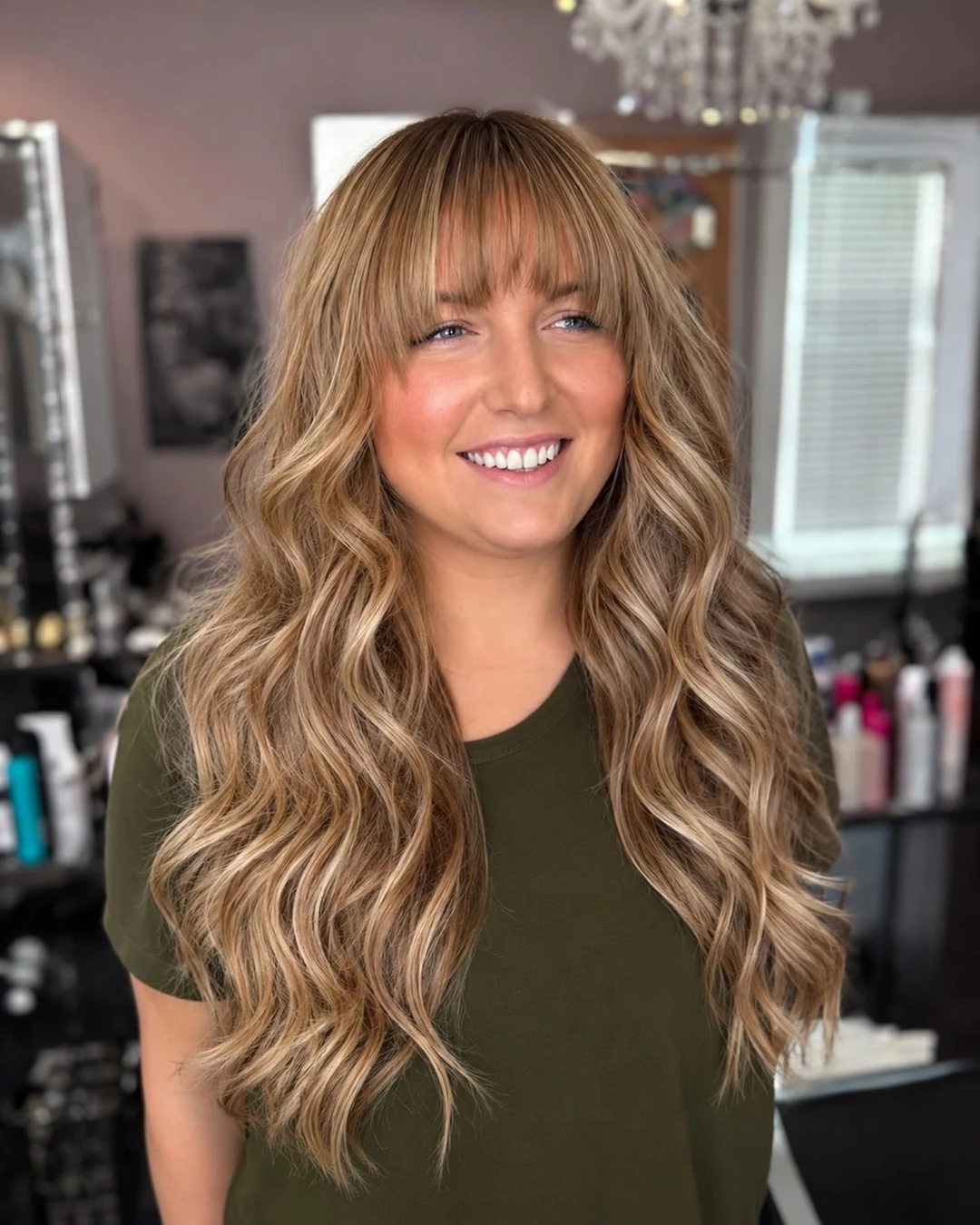
Image credit: @jenna_rpshair
Blonde shows every layer a wolf cut has. This long voluminous version pairs straight bangs with big waves and blonde that runs from root to tip, so the texture reads clearly and the cut looks bright and full. It is a strong choice if you want the wolf cut to feel glamorous rather than grungy.
Blonde wolf cuts need a little more care than darker ones. Use a purple shampoo once a week to keep the blonde from turning brassy. The layers expose a lot of hair to the sun and to heat styling, and both push blonde towards yellow faster than a solid colour would show.
The Silver Wolf Cut
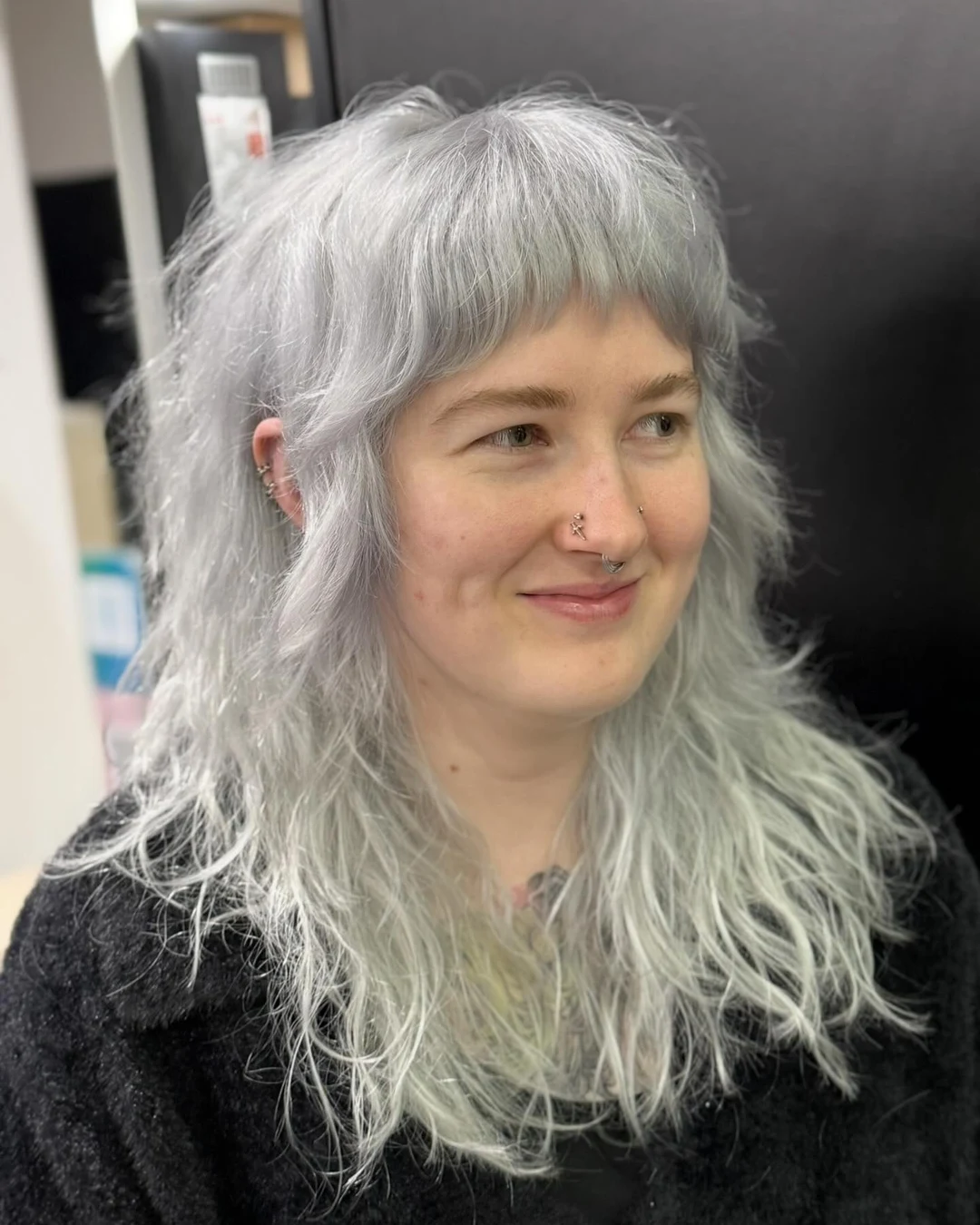
Image credit: @jacqui_passionforhair
Silver is the most striking colour you can put on a wolf cut. This shoulder-length version in cool silver-grey turns the choppy layers into the whole point — every wave and every piece catches the light differently, so the cut looks almost sculptural. It is a confident choice, and it works because the cut’s texture does the talking and the colour simply makes it louder.
Silver needs the most upkeep of any shade here. Book a toner refresh every four to six weeks to keep silver from going yellow. The colour fades faster than brown or blonde, and on a layered cut the fading shows first on the shortest pieces at the crown.
How to Ask Your Stylist for a Wavy Wolf Cut
Take a photo of the version you like and be specific about three things: the length, the fringe and the texture. Say “shoulder-length” or “long” so the length is clear, say “wispy”, “curtain” or “straight” so the fringe is clear, and say “choppy” or “soft” so the layers are clear. Those three words tell your stylist almost everything they need. Mention your wave pattern too — looser waves need longer layers so the cut does not puff out, while tighter waves can take shorter layers because the curl holds the shape. And ask how the cut will dry on its own, because a wolf cut that only looks good after a blow-dry is not the cut you came in for.
Finding the Wavy Wolf Cut That Fits You
Wavy wolf cuts work because the layers follow your natural wave instead of fighting it, and the undone finish means the cut looks good on the days you do nothing to it. Choose the version that fits your life — the medium undone cut for everyday, the silver or copper for a change, the curtain bangs for the easiest grow-out, the long layers if you want to keep your length. If you want more choppy, layered inspiration, 15 Ways to Wear a Shaggy Bangs Haircut With Confidence has fifteen bangs-first versions in the same spirit, and 2000s Emo Hairstyles That Are Making a Comeback has more layered, textured cuts to browse. However you wear it, keep the layers choppy, the waves natural and the styling simple.