Visiting Tokyo Tower at Night What Travelers Should Know
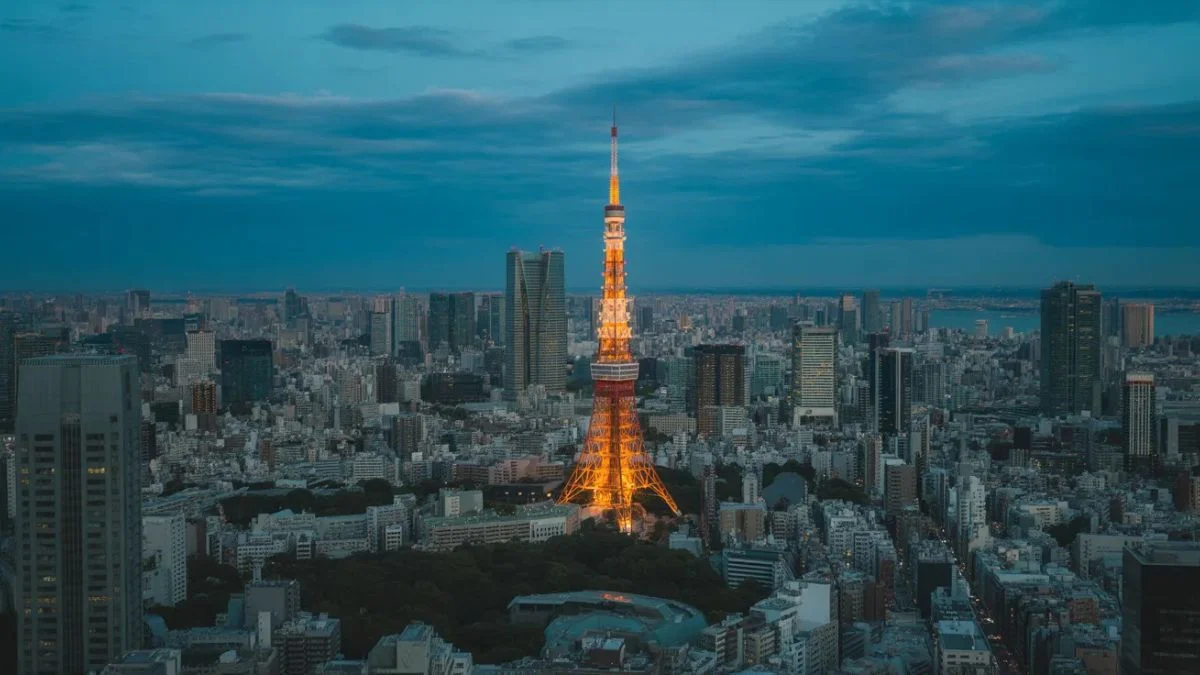
There are taller observation decks in Tokyo, and there are newer ones too, but Tokyo Tower still wins on atmosphere. At night, it feels less like a checklist stop and more like a classic Tokyo scene come to life. The orange-and-white structure glows over the city, the skyline stretches in every direction, and the area around the tower blends old Tokyo calm with modern city energy. The tower stands 333 meters tall, has a 150-meter Main Deck, and a 250-meter Top Deck Tour, while the base area includes shops, cafés, and restaurants in Foot Town.
For travelers, a night visit works best when you treat it as more than a quick elevator ride. The best experience usually includes the illuminated tower itself, time on at least one observation deck, and a short walk around nearby Zojoji Temple or Shiba Park for exterior views. Official tourism sources also highlight the neighborhood around the tower, especially Zojoji Temple and Shiba Park, as part of the wider experience.
Why Tokyo Tower Feels Different After Dark
A daytime visit is good for orientation, but nighttime is when Tokyo Tower becomes cinematic. The official Tokyo Tower site explains that the tower has two major illumination styles: the standard Landmark Light and the Infinity Diamond Veil, with regular Infinity Diamond Veil lighting on Mondays and Thursdays from 8:00 p.m. to 10:00 p.m. There is also a two-minute hourly sparkle show called “Kirameki.” That means a night visit is not only about the skyline from the deck, but also about seeing the tower itself as part of the city’s evening mood.
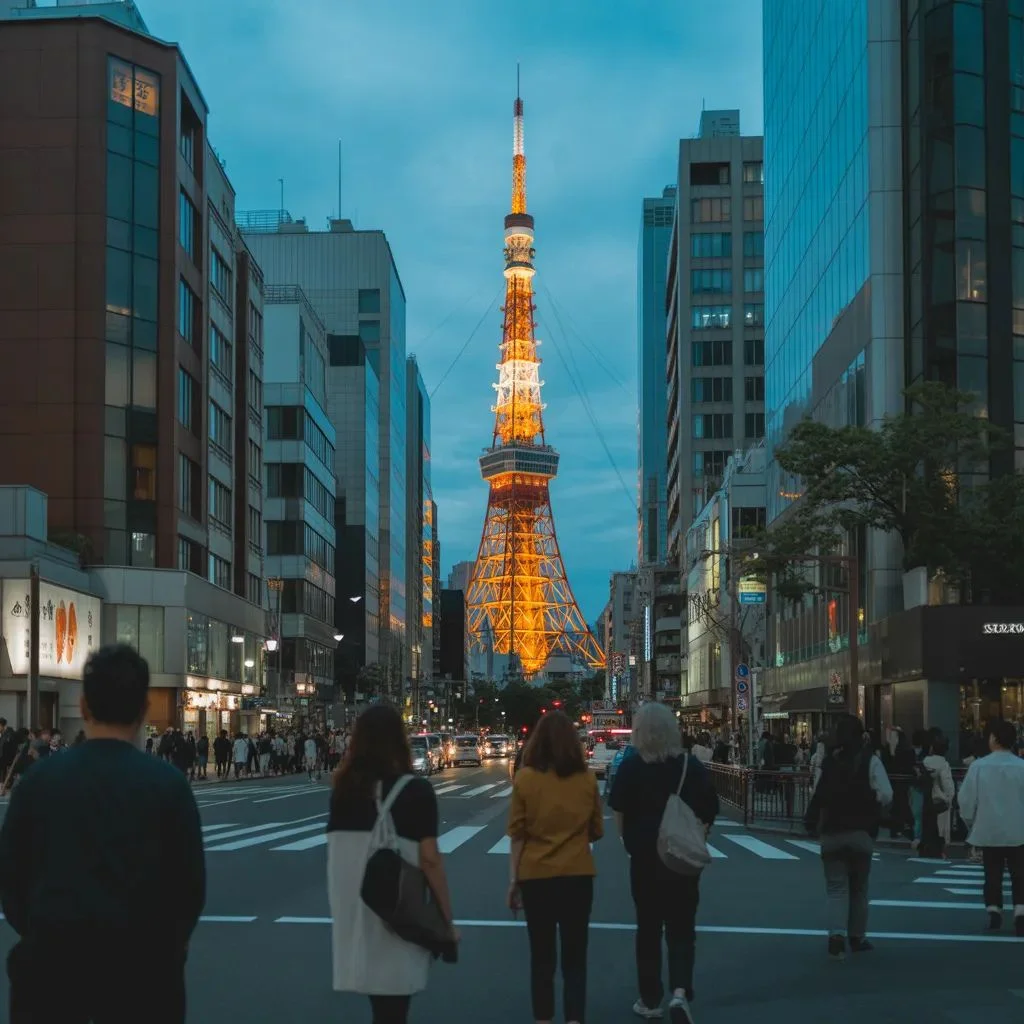
This is also where Tokyo Tower has an advantage over some other viewpoints. From inside the deck, you are close enough to the center of the city to feel its scale, but from the streets below, the tower itself becomes the main visual event. That combination is rare. You can admire the structure from outside, then head up for wide city views, then come back down and photograph it again from the neighborhood. JNTO specifically notes that the structure’s charm can be appreciated from the outside when it lights up at night, while the top offers sweeping views over Tokyo.
Main Deck or Top Deck at Night
Most travellers will be deciding between the Main Deck and the Top Deck Tour. The Main Deck sits at 150 meters and is open from 9:00 a.m. to 11:00 p.m., with last admission at 10:30 p.m. The Top Deck Tour includes access to both 150 meters and 250 meters, runs from 9:00 a.m. to 10:45 p.m., and the last tour starts at 10:15 p.m. The Top Deck may close in poor weather or under operational restrictions, so that is worth checking on the day.
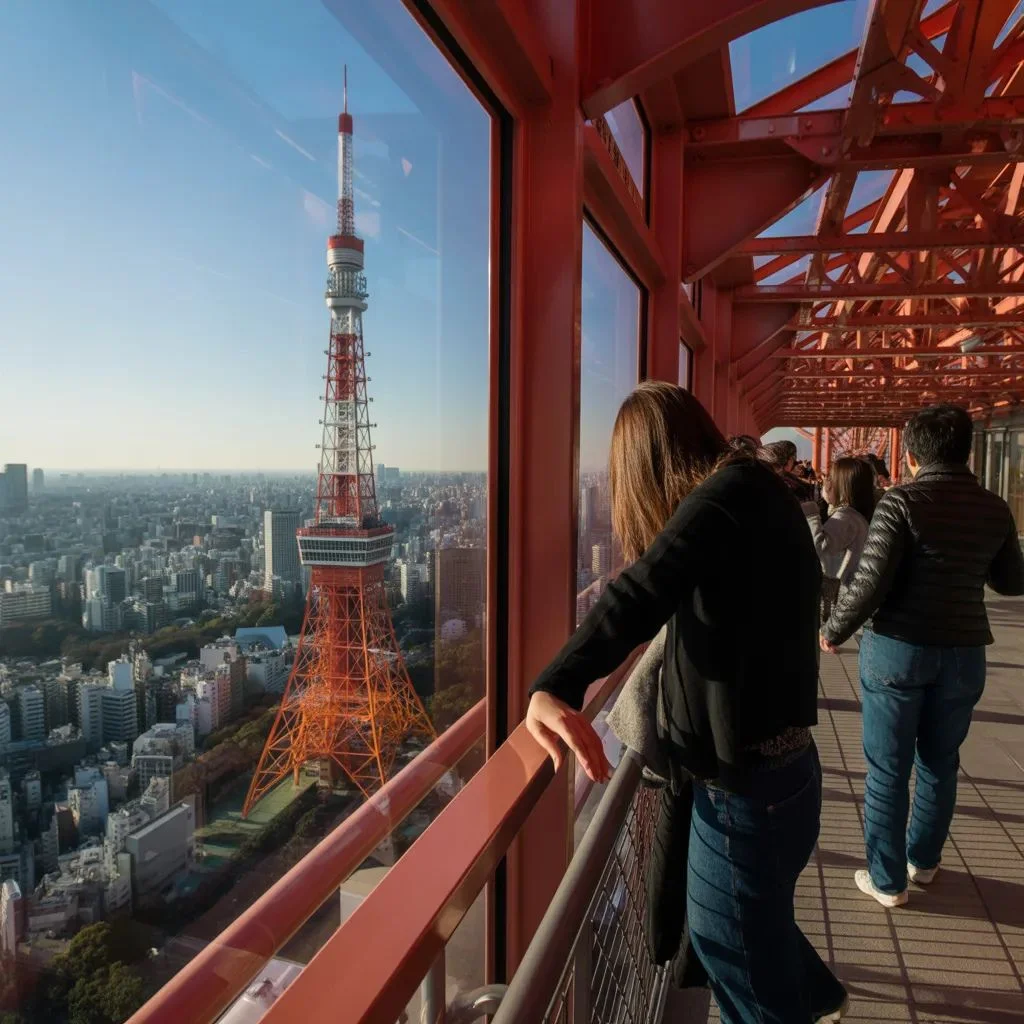
If your budget is tighter, the Main Deck is enough for many visitors. It includes the famous Skywalk Window, a glass floor that lets you look almost straight down, and it gives you a strong sense of being above the city without turning the visit into a long process. At night, that is often all you need. The Main Deck also has shops, a café, and the Top Deck gate, so it still feels like a complete experience.
The Top Deck Tour is the better choice if this is one of your signature Tokyo evenings. The extra height does matter, especially when the air is clear, and official tourism guidance notes that Tokyo Tower can offer views all the way to Mount Fuji on crisp days, with the higher deck providing the best viewing conditions. Even if Fuji is not visible at night, the higher deck gives the city lights more depth and drama.
The Best Time to Visit at Night
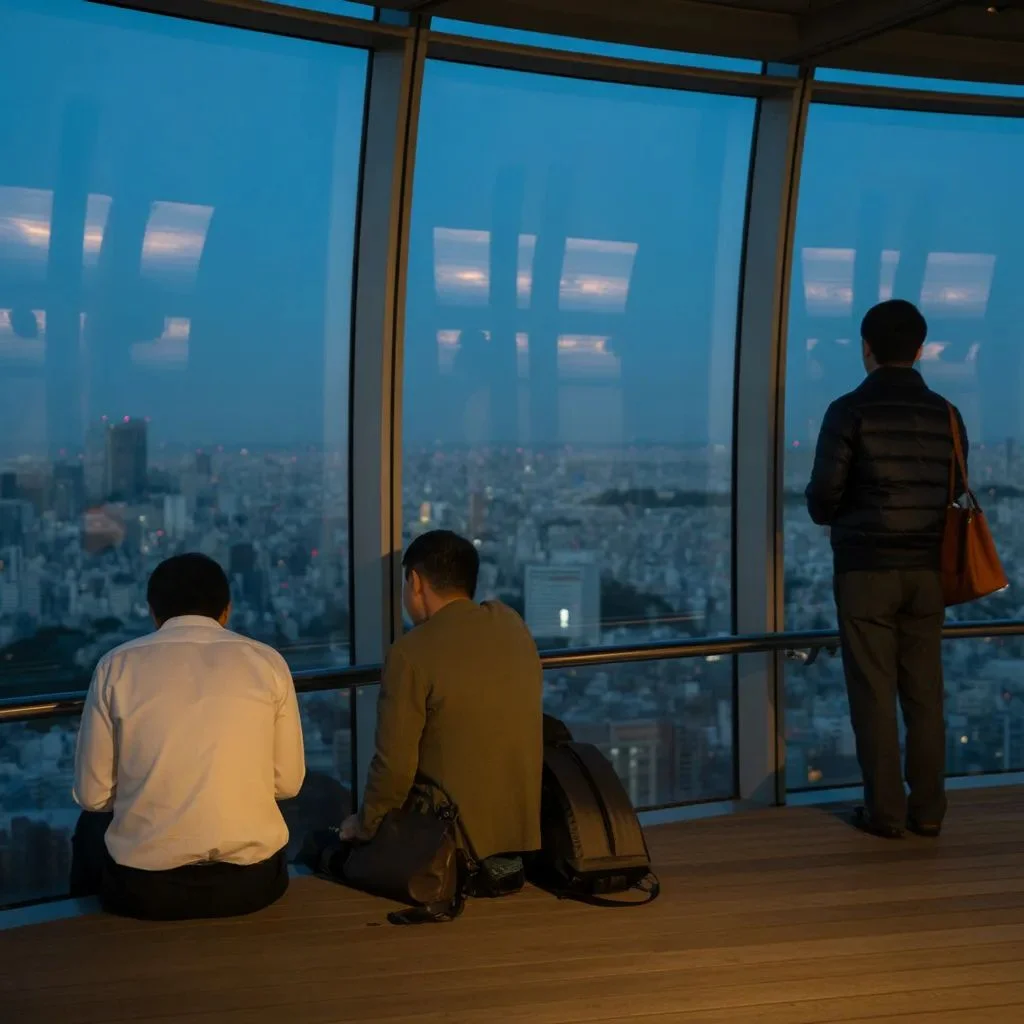
The smartest time to arrive is usually around dusk and stay into full darkness. That way, you get the transition from daylight to evening, then the full city glow after sunset. This is not a rule from the tower itself, but it is the best use of the long operating hours and the tower’s lighting schedule. Mondays and Thursdays are especially interesting if you want a chance to see the Infinity Diamond Veil during its regular 8:00 p.m. to 10:00 p.m. run.
Travelers who prefer easier photos from the ground should not rush straight inside. Spend a little time outside first. The walk between Zojoji Temple, Shiba Park, and the tower area gives you several strong angles, and local tourism sources repeatedly highlight that contrast between the historic temple grounds and the modern tower. In practical terms, that means your evening can start with exterior views, continue with the observation deck, and finish with dinner nearby.
If you want the lightest crowds, a later visit can feel easier than the first big evening rush, but that is more a travel strategy than an official rule. What the official site does confirm is that last entry times are late enough to make a post-dinner visit realistic.
Getting There Without Stress
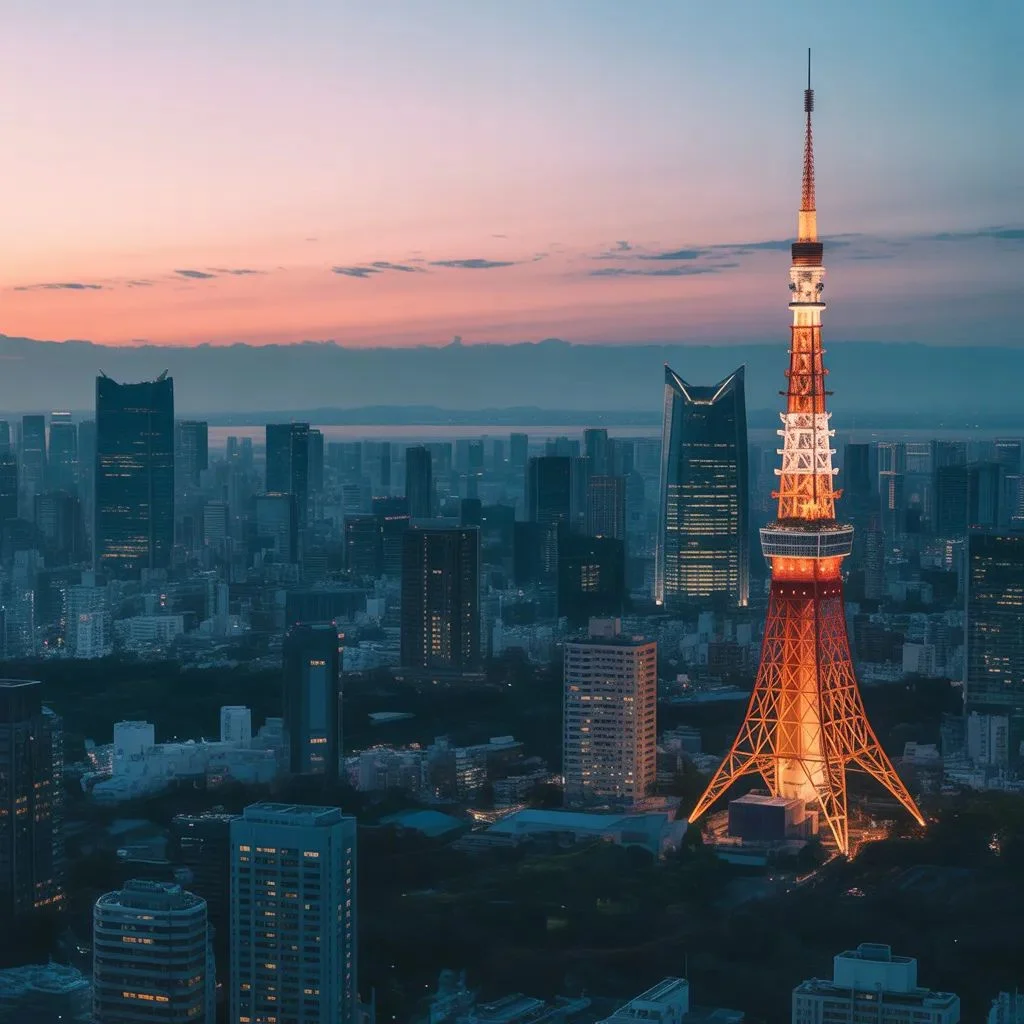
One reason Tokyo Tower works so well for evening sightseeing is that it is easy to reach from several stations. The official access page says the tower is accessible from six stations on five lines, including Akabanebashi, Kamiyacho, Onarimon, Shibakoen, Daimon, and JR Hamamatsucho. JNTO also highlights Onarimon, Kamiyacho, and Akabanebashi as convenient station options, with Hamamatsucho being a longer walk.
For most travelers, Akabanebashi or Kamiyacho tend to feel simplest. Akabanebashi gives you a direct visual approach, while Kamiyacho is also straightforward and widely used. If you are building a broader evening route, Hamamatsucho can work nicely because it connects well with other parts of Tokyo, but the walk is longer. The tower also has parking, though most visitors will find rail easier than driving in central Tokyo.
Small Details That Improve the Visit
A lot of travellers overlook the details inside Tokyo Tower, but they help make the visit memorable. On the Main Deck, the Skywalk Window is one of those simple features that people remember more than expected. There also the official shop, café space, and access to the Top Deck gate. These are not just filler attractions. They slow the visit down in a good way and give the tower more personality than a pure elevator-up, elevator-down experience.
There is also an outdoor stair option to the Main Deck on weekends and holidays. The official site describes it as about 600 steps, taking roughly 12 to 13 minutes, with regular observation fees applying. That is a fun option for travellers who want a more active approach, though for a true night-focused visit many people will still prefer the elevator and save their energy for the neighborhood afterward.
If you are traveling in cooler months, keep clear-weather visibility in mind. JNTO notes that Mount Fuji is best seen from afar on crisp, clear winter days. Even when Fuji is not visible, winter and cooler evenings often reward travellers with cleaner skyline views.
What to Pair With Your Night Visit
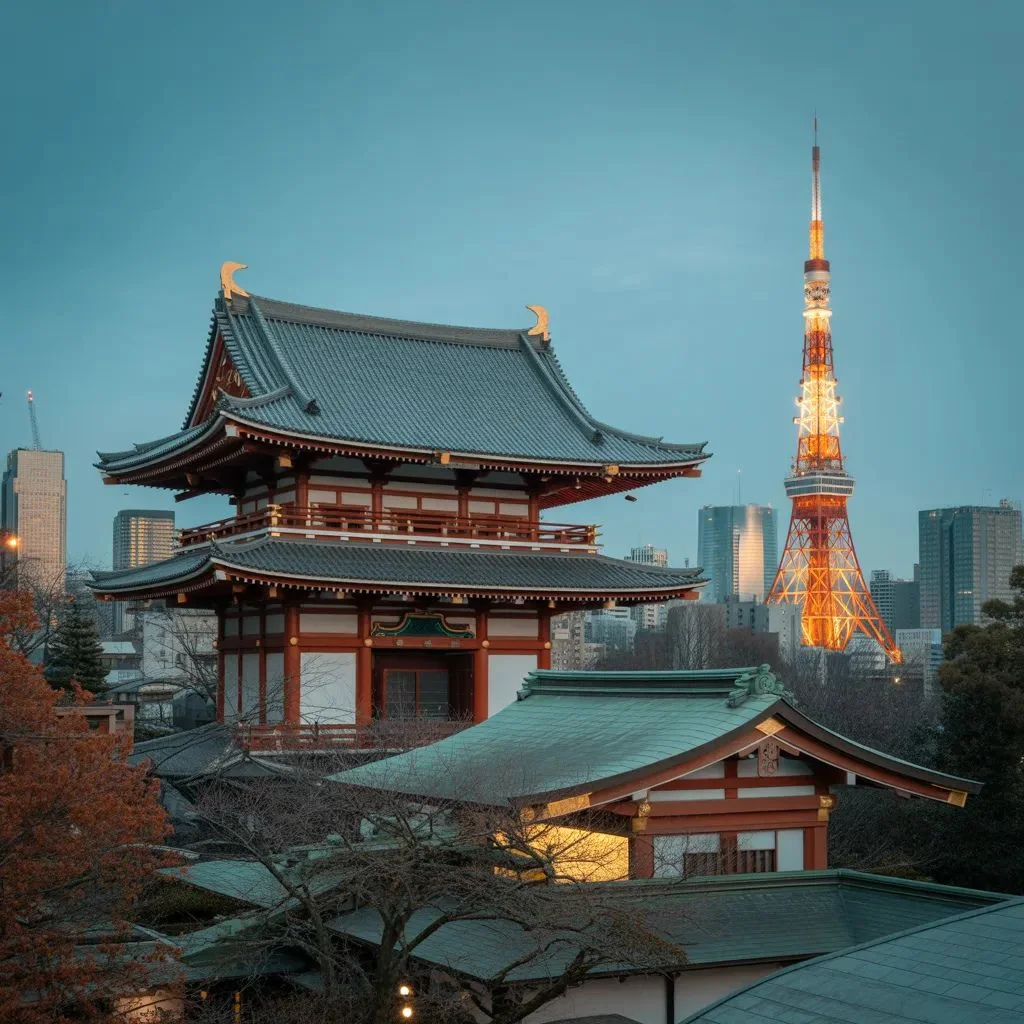
The best version of Tokyo Tower at night usually includes at least one nearby stop. Zojoji Temple is the most obvious and most rewarding. It is old, atmospheric, and one of the classic places to frame the tower behind traditional architecture. Minato City’s tourism site notes that Zojoji is open year-round, has free admission, and is a short walk from multiple nearby stations.
Shiba Park is another easy addition. It surrounds the temple area and sits right next to the tower, giving you greenery, open space, and several calmer viewpoints. Official tourism material describes it as one of Japan’s earliest city parks and highlights its seasonal scenery. That matters because the tower area is not only about height and lights. It is also about contrast: temple, park, skyline, and landmark all in one compact part of Tokyo.
This is why Tokyo Tower still works so well for travelers even in a city full of newer attractions. It gives you a full evening shape. You can arrive by subway, walk through a historic district, photograph one of Tokyo’s classic icons, go up for the skyline, and end the night without needing a long transfer to the next stop.
Practical Tips Before You Go
Book ahead if you already know your schedule, especially for the Top Deck Tour. The official site sells online tickets and notes web pricing for both deck options. Buying ahead can make the experience smoother, which matters more in the evening when you do not want to spend prime night hours in a queue.
Check the day’s operating status before you go. The Top Deck may close in poor weather or under operational restrictions, and last admission to the Main Deck can move earlier depending on congestion. That is uncommon travel advice, but it is directly stated on the official fees and business hours page.
Finally, do not treat Tokyo Tower as only an observation deck. Treat it as an evening district experience. Give yourself time for the outside view, the deck, and the nearby streets. That slower approach is usually what makes travelers leave feeling that the visit was worth it.
Is It Worth It
Yes, especially if you want one Tokyo evening that feels iconic without becoming overly complicated. Tokyo Tower is not the tallest viewpoint in the city, but at night it offers something more emotional than purely technical height. The lights, the classic design, the central location, and the historic surroundings all work together. For first-time visitors, it is easy to understand and easy to enjoy. For repeat visitors, it still feels like old Tokyo holding its place in a constantly changing skyline.
Our Pick: Best Japan Travel Outfits Ideas for Tokyo Kyoto and Osaka.
FAQs
Is Tokyo Tower better at night or during the day?
Night is usually more atmospheric because the tower itself is illuminated and the city lights add depth to the skyline. Daytime can be better for long-distance visibility, especially on clear days when Mount Fuji may be visible.
How long should I spend at Tokyo Tower at night?
About 1.5 to 3 hours works well if you include time outside the tower, one observation deck, and a short walk through Zojoji Temple or Shiba Park. That timing is a travel recommendation based on the layout and nearby attractions.
Is the Main Deck enough?
Yes for many travelers. The Main Deck gives you city views, the Skywalk Window, and the core experience. The Top Deck Tour is better when you want a more premium, signature-night version of the visit.