Toddler Braids With Beads Kid Hairstyles That Are Gentle on Hair
Cute hair on a little one should never come at the cost of comfort. That is why many parents look for Toddler Braids With Beads Kid Hairstyles that feel soft on the scalp, stay neat for a few days, and still look adorable in photos, at daycare, or during family outings. The best styles are not the smallest or the fanciest. They are the ones that respect a toddler’s tender edges, natural texture, and low patience for long styling sessions.
Gentle styling matters more than many people realize. Pediatric and dermatology guidance notes that tight braids, ponytails, and buns can lead to traction alopecia, a kind of hair loss that often shows up around the front, sides, and back edges. Dermatologists also warn that pain, stinging, crusting, or “tenting” of the scalp are signs a style is too tight. Loose braids, lighter tension, and simpler parts are the safer direction for young children.
Why Gentle Styling Should Come First
When parents search for Toddler Braids With Beads Kid Hairstyles, the first thing to think about is not the beads. It is the tension. A style can be beautiful and still be too tight. Hair that is pulled again does not just get frizzy. Over time, it can break, thin, or stop growing well around the hairline. That is why loose braids, short wear time, and regular breaks from pulled styles matter so much for toddlers.
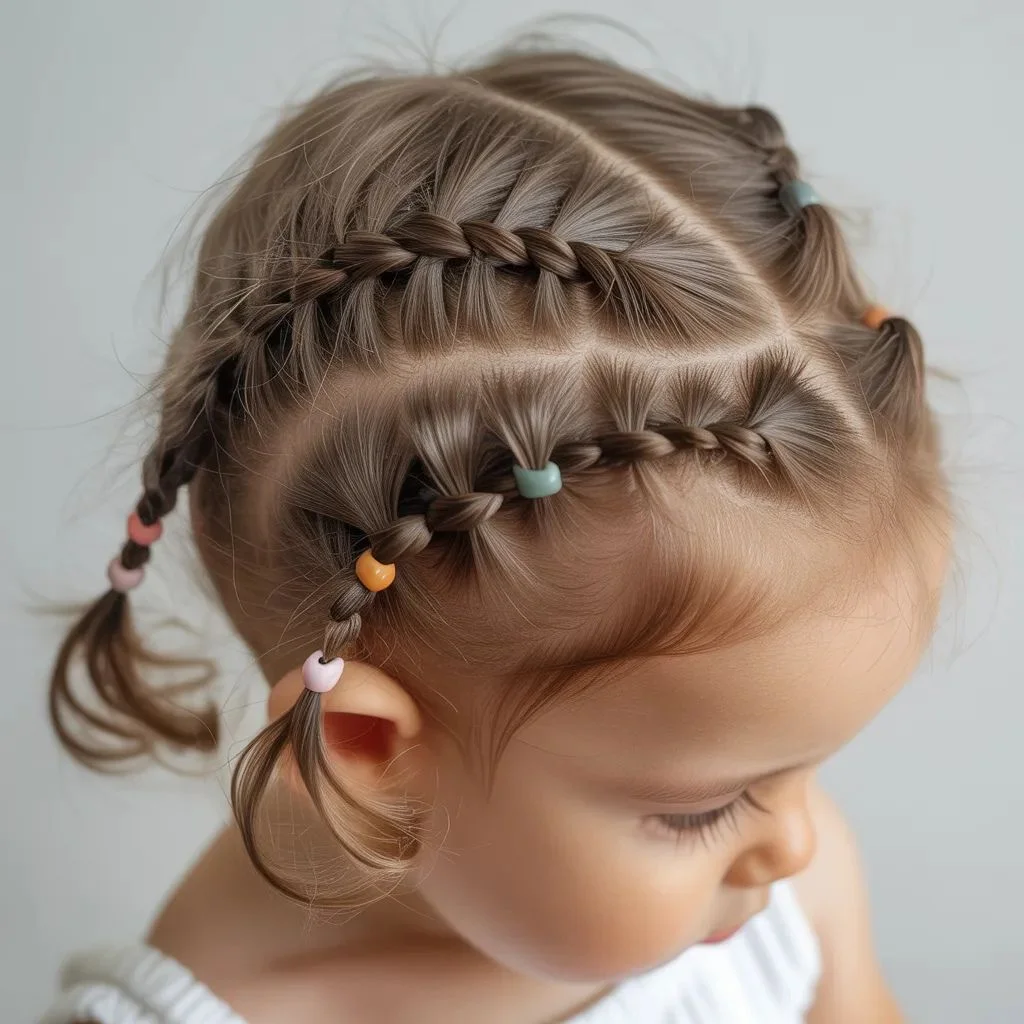
A gentle braided style usually has a few simple features: bigger parts, fewer braids, shorter length, and light accessories. Dermatologists specifically recommend loosening braids around the hairline, choosing thicker braids, and keeping braided styles shorter because longer braids weigh more and pull more. For children, that advice is especially useful because their scalps are small and sensitive, and they move, nap, and play all day.
What Makes a Beaded Braid Style Toddler-Friendly
The sweetest Toddler Braids With Beads Kid Hairstyles usually look simple. Think soft parts, round edges, and braids that do not stretch the scalp shiny. If the style makes your child rub their head, cry while sleeping, or say “owie,” it is not toddler-friendly, no matter how cute it looks. One of the clearest dermatologist tips is simple: pain equals damage.
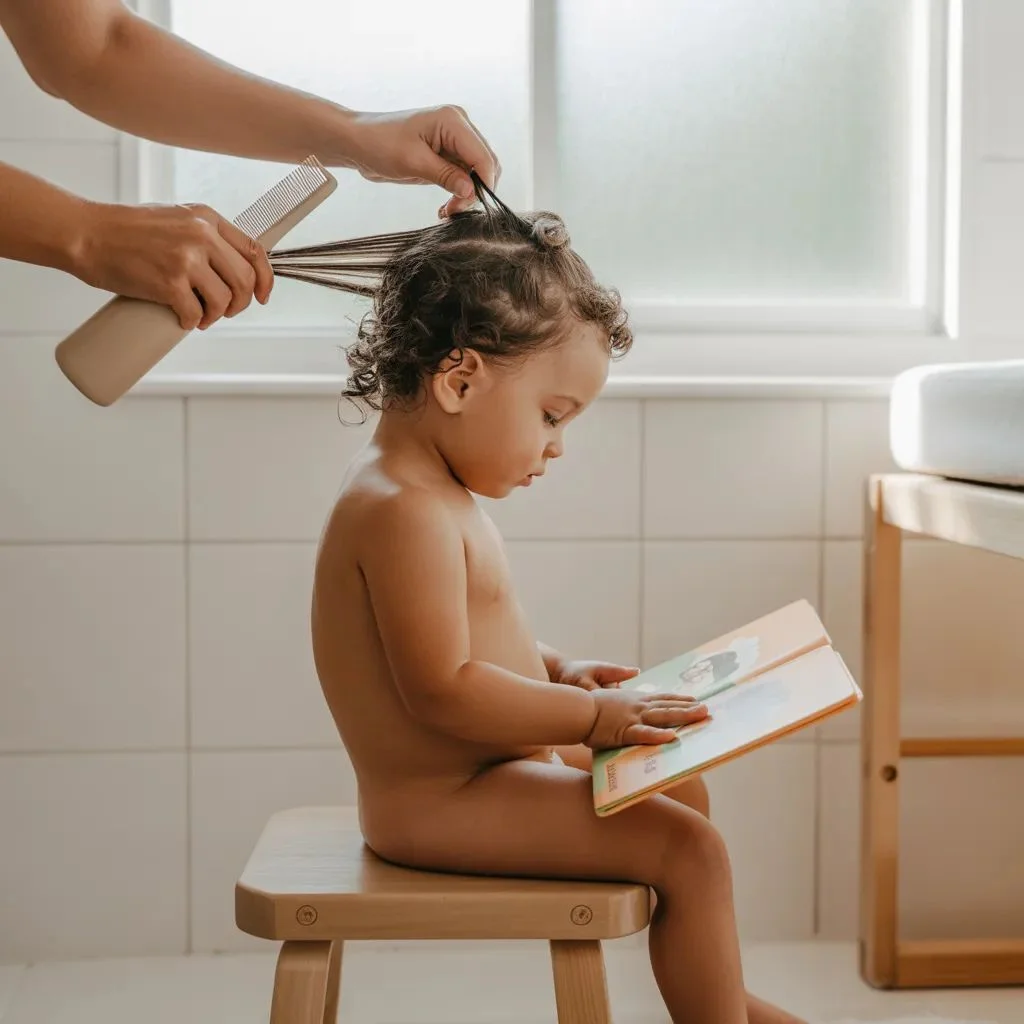
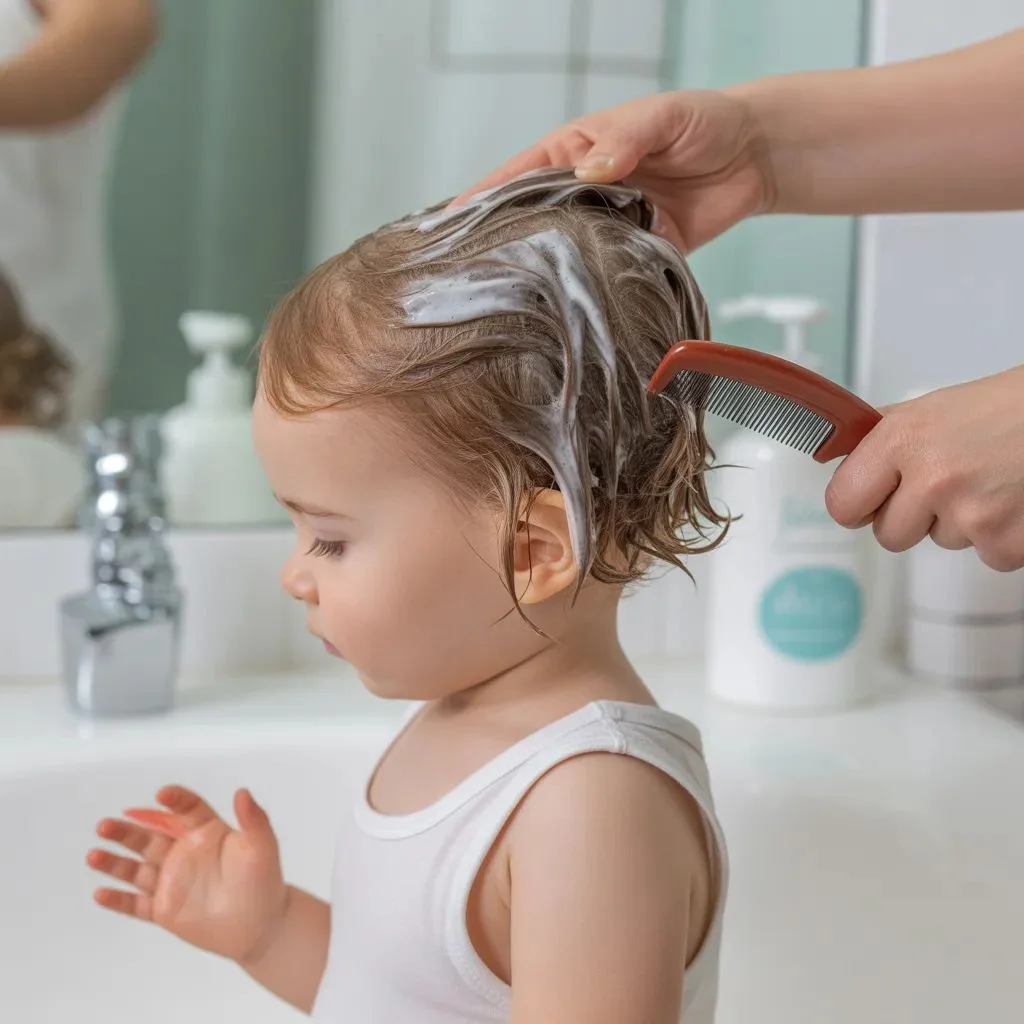
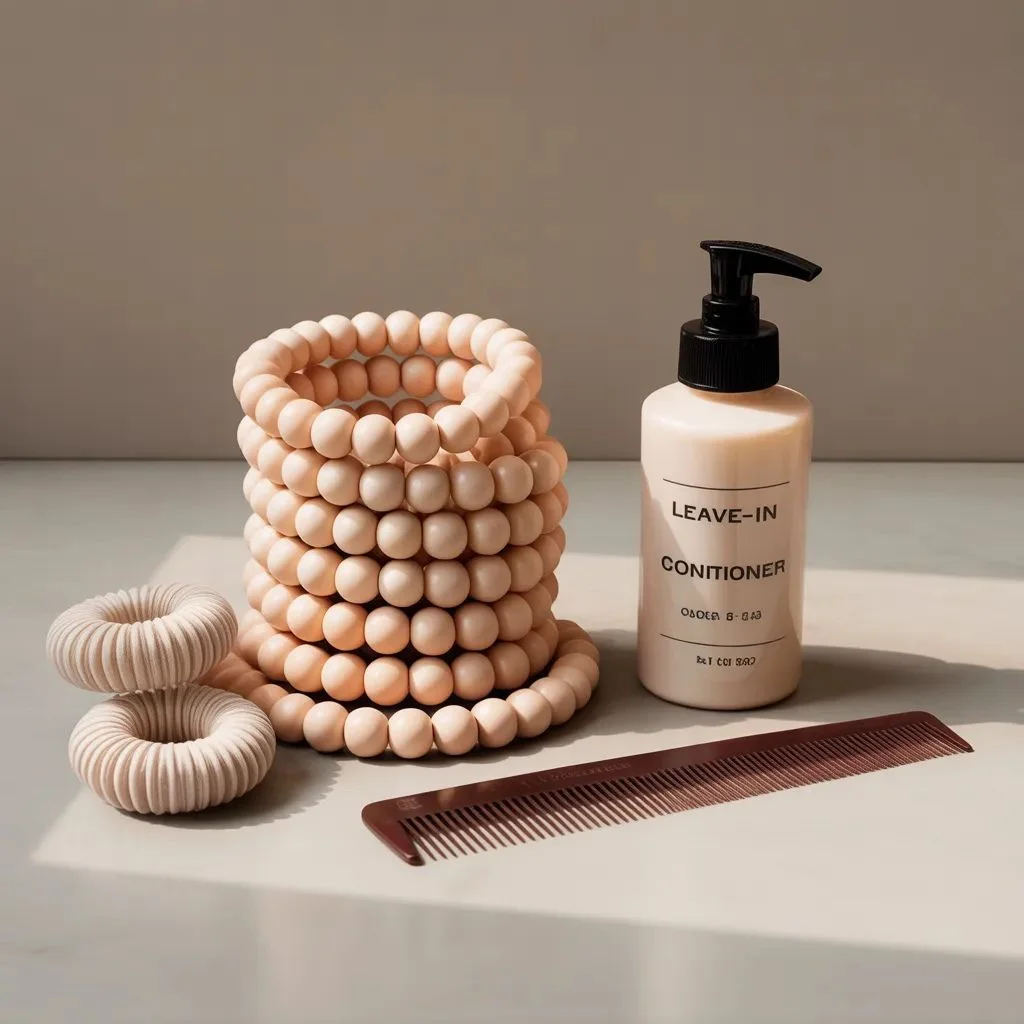
Another big detail is prep. Hair that is moisturized and detangled before braiding is easier to section and less likely to snap. The American Academy of Dermatology recommends moisturizing conditioner after shampoo, using leave-in conditioner or detangler, and detangling wet hair in sections with fingers or a wide-tooth comb instead of brushing dry textured hair. Those small steps make a big difference in how gentle a braided style feels from start to finish.
8 Cute Style Ideas That Stay Soft on the Scalp
These Toddler Braids With Beads Kid Hairstyles are built around comfort first. They are not meant to be overloaded with extensions, heavy ends, or tiny tight sections.
1. Two Chunky Straight-Back Braids
This is the easiest classic. Make one clean center part, braid straight back on each side, and add three to five light beads at each end. Because the style uses only two braids, it reduces tension and cuts styling time.
2. Side-Part Double Braids
A side part gives the style a softer look. Create two medium braids and keep the front loose around the edges. Add matching beads on both sides for a tidy everyday style that still feels playful.
3. Four Big Box Braids in a Short Bob Shape
Instead of many tiny braids, try four or six larger box braids that stop around chin or shoulder length. This keeps weight down and makes takedown easier for both parent and child.
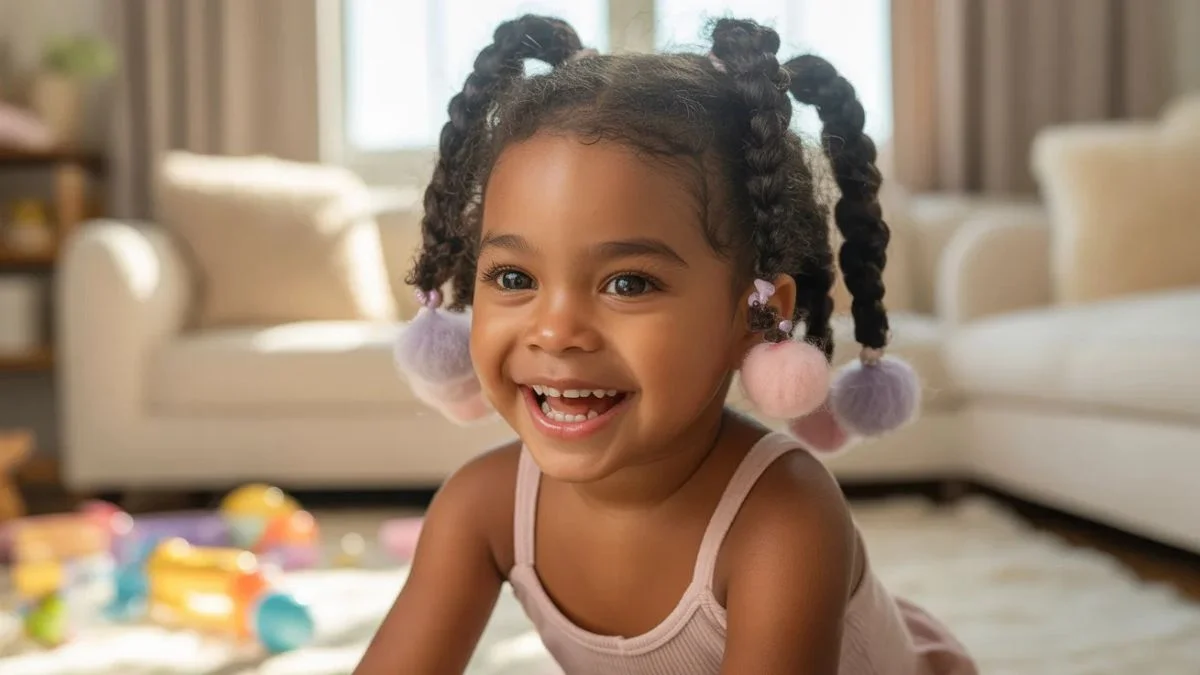
4. Beaded Pigtail Braids
Part the hair into two low sections and braid each section loosely. This works well for toddlers who do not like hair pulled high. The lower placement keeps tension softer at the temples.
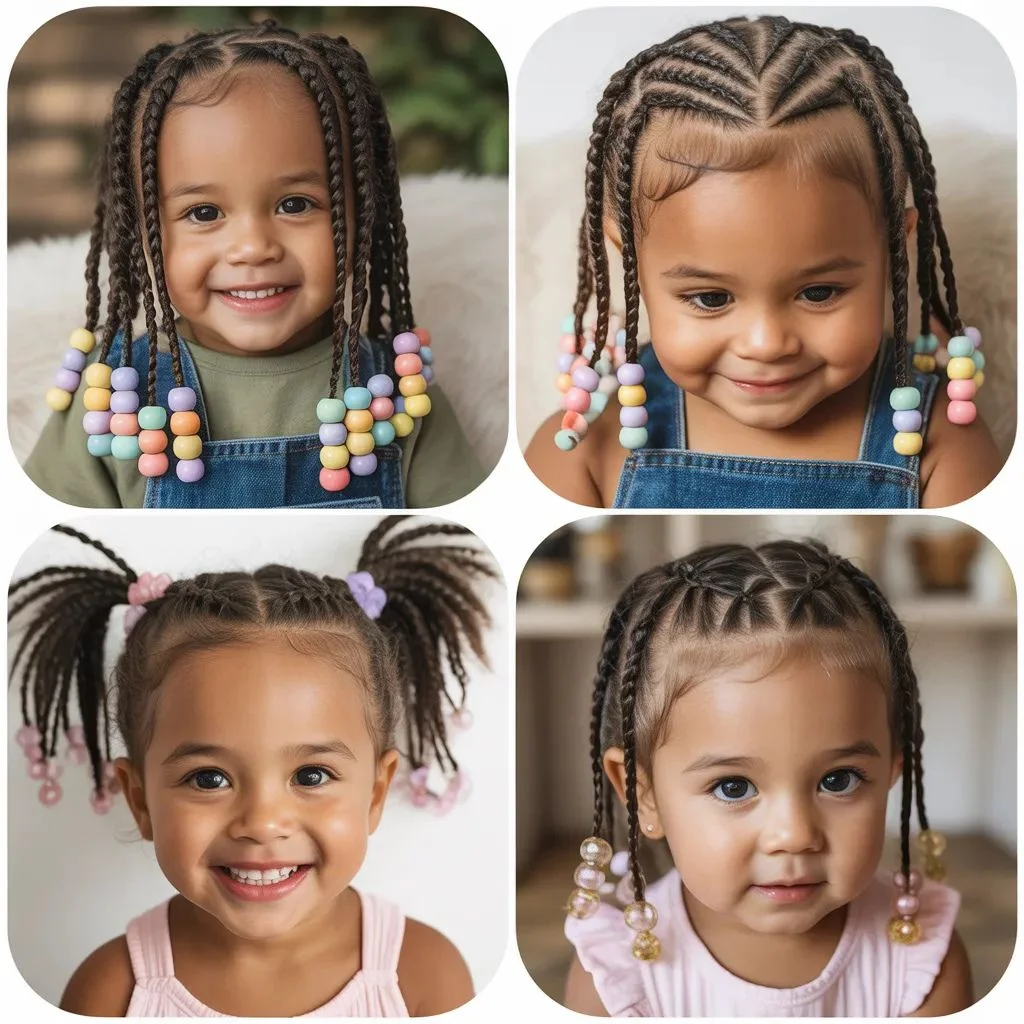
5. Half-Up Braided Puffs With Beaded Front Braids
Braid only the front or top section and leave the back in two puffs. This creates the beaded look without putting the whole head under tension. It is a good choice for active toddlers.
6. Zigzag Part With Two Thick Braids
If you want something a little more special, change the part instead of making the braids tighter. A zigzag or curved part gives style interest while keeping the braid count low and gentle.
7. Front Accent Braids With Loose Back Sections
Use two or four tiny front braids with beads and leave the rest in soft puffs, twists, or loose curls. This gives the “beads” look many parents want without a fully braided head.
8. Crown-to-Back Braids With Light End Beads
Braid from the front toward the back in two or four large sections, but keep the braids short and flexible. This gives a neat shape for church, birthdays, or photos without heavy pull.
The common thread in all of these Toddler Braids With Beads Kid Hairstyles is low tension. Bigger sections, shorter braids, and lighter ends usually feel better than tiny braids with lots of weight. That is also in line with dermatologist advice to choose thicker, shorter braids and keep the hairline loose.
Prep Work That Helps Hair Stay Healthy
Before you even start braiding, wash-day habits matter. Dermatologists recommend using a gentle shampoo, following with conditioner, and using leave-in conditioner or detangler to reduce breakage. For curly or tightly coiled hair, they also recommend detangling while the hair is wet and working in sections. For many families caring for Black hair, washing once a week or every other week can help control buildup without drying the hair out too much, and conditioner should be used every wash.
This prep stage is what makes Toddler Braids With Beads Kid Hairstyles look polished without needing hard pulling. When the hair is soft, moisturized, and sectioned properly, you do not have to fight it. A wide-tooth comb, a little patience, and a child-friendly styling routine will usually do more for the final result than strong gel or tight gripping ever will.
Braiding Rules That Protect Tender Edges
If you want Toddler Braids With Beads Kid Hairstyles that are truly gentle, keep these rules in mind:
• Never braid so tight that the scalp looks shiny.
• Keep the front hairline looser than the rest.
• Choose fewer, thicker braids instead of many tiny ones.
• Keep braided length short so the style stays light.
• Use covered bands and soft finishing tools when possible.
• Redo the style if your child complains of pain, stinging, or soreness.
• Watch for broken hairs, scalp crusting, or thinning around the edges.
These tips are not about making the style less pretty. They are about making it wearable. The truth is that a soft braid often looks better after a day or two than a painfully tight braid. It sits more naturally, moves better, and does not leave a toddler cranky and rubbing her head all afternoon.
Bead Safety Is Part of Good Styling
This part matters. Beads and other small objects can be choking hazards if swallowed, and children can also inhale small objects into the airway. Pediatric safety guidance specifically lists beads among small objects that can be dangerous, while CHOP notes that beads can be aspirated into the airway. That means beaded styles should be supervised, checked often, and fixed right away if any bead is loose, cracked, or sliding off.
For that reason, I prefer larger, smooth beads for little kids and a smaller number of them. I also avoid very tiny beads on children who still put things in their mouths. If your toddler pulls at accessories, chews on braid ends, or takes styles apart quickly, choose braid styles without beads for now and save the beaded look for later. Cute is never worth a safety risk.
A Simple Weekly Routine for Braided Toddler Hair
A good routine keeps Toddler Braids With Beads Kid Hairstyles looking fresh without too much fuss. Start by checking the scalp every day or two. If you see redness, flakes stuck to product, broken hairs at the front, or any sore spots, it is time to loosen or remove the style. Dermatologists advise watching for early signs like broken hairs and a receding hairline in styles that pull.
On refresh days, use a light mist or leave-in on the lengths, smooth flyaways with your hands, and avoid loading the scalp with heavy product. If your child has textured hair, a leave-in conditioner can help reduce breakage and frizz. Keep sleep simple too. A soft bonnet or satin pillowcase may help some children, but comfort comes first. A toddler who hates bedtime headwear does not need a fight every night over hair.
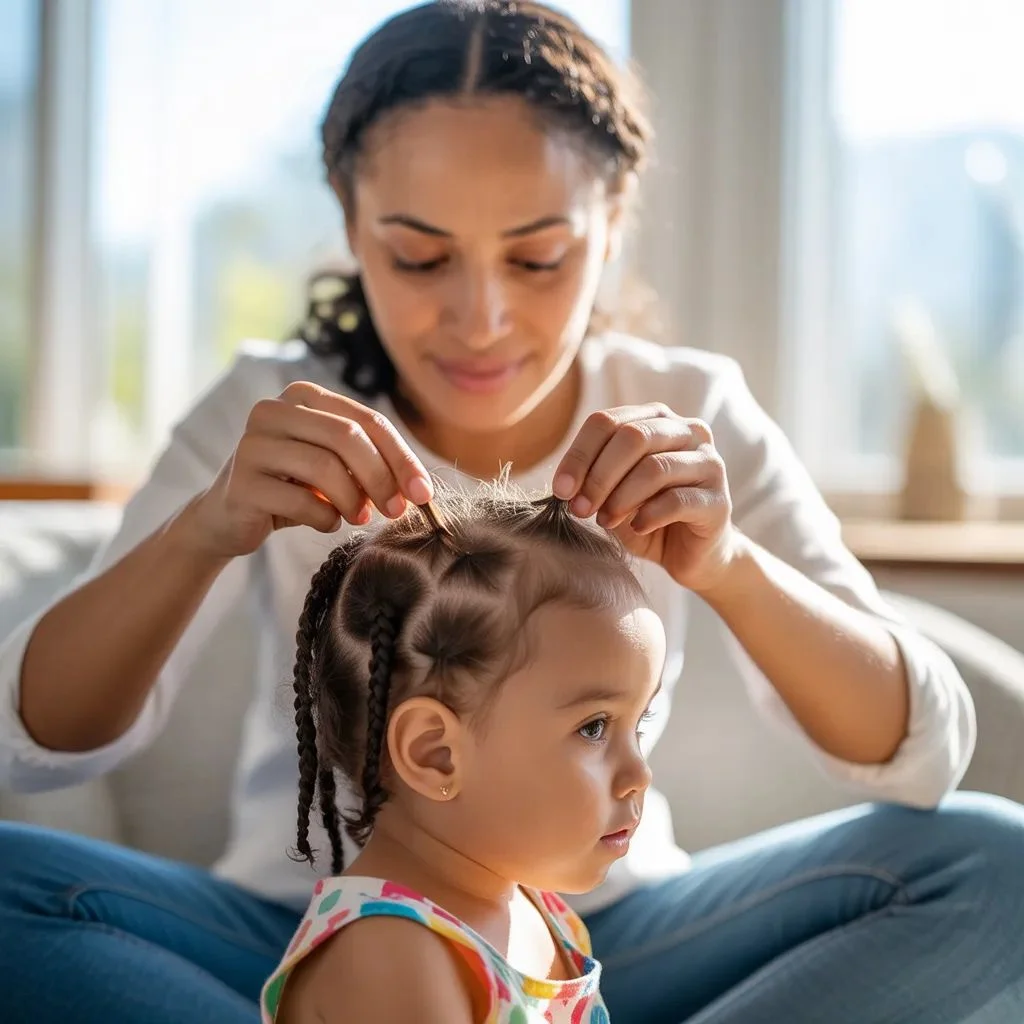
When to Skip Braids and Let the Hair Rest
Even the best Toddler Braids With Beads Kid Hairstyles should not be worn back-to-back forever. Hair benefits from rest. If the edges look thin, the scalp feels tender, or your child seems irritated during styling, switch to loose puffs, simple twists, or an easy wash-and-go day. Dermatologists recommend changing hairstyles regularly so hair can recover from stress caused by pulled styles.
If you notice persistent thinning, bald patches, flaking, or hair loss that does not improve after loosening styles, talk with your pediatrician or a board-certified dermatologist. Tight styling is one cause of hair loss in kids, but it is not the only one. Pediatric guidance notes that fungal infections, stress-related shedding, and other conditions can also affect children’s hair.
A Soft Style Is the Prettiest Style
The best Toddler Braids With Beads Kid Hairstyles are the ones your child can wear happily. They should be cute, yes, but also light, soft, and easy on the scalp. A few well-placed beads, a clean part, and a loose braid pattern can look just as lovely as a more complex style. In fact, on toddlers, simple usually wins.
When in doubt, choose comfort over tension, bigger braids over tiny ones, and fewer beads over heavy ends. Gentle styling protects edges, keeps wash day easier, and helps your little one enjoy the style instead of just wearing it.
Editor Choice: Best Black Woman Hairstyle Trends to Try This Year.
FAQs
How long should toddler braids with beads stay in?
There is no single rule for every child, but toddlers usually do best with shorter wear times than older kids or adults. Check the scalp often and remove the style early if it gets fuzzy, tight, dry, or uncomfortable. Dermatologists warn against leaving pulled styles on too long and recommend switching hairstyles regularly.
Are beads safe for toddlers?
They can be, but only with close supervision and the right child. Beads are small objects, and pediatric safety sources warn that beads can be choking or aspiration hazards if swallowed or inhaled. Use larger beads, inspect them often, and skip them for children who still mouth small objects.
What is the gentlest braid style for a toddler?
Two chunky braids, low pigtail braids, or a few front accent braids are often among the gentlest options because they use fewer sections and less tension. Thicker, shorter braids are generally kinder to the scalp than many tiny tight braids.
What are signs a braid style is too tight?
Pain, stinging, scalp crusting, tenting, and broken hairs around the front are all warning signs. If you see any of those, take the style down or loosen it right away.