
Non-Toxic Skin Care Routine Guide for Sensitive Skin
Sensitive skin does not need a fancy shelf full of products. It usually needs fewer products, gentler formulas, and a routine you can repeat without guessing every day. When people say Non-Toxic Skin Care Routine, they often mean products that feel safer, simpler, and less irritating. For sensitive skin, that usually comes down to fragrance-free basics, careful ingredient reading, and avoiding products that make bold promises on the front but cause stinging, redness, or dryness once they touch your face. The FDA says terms like “hypoallergenic,” “fragrance-free,” and “for sensitive skin” are not backed by one federal standard in the U.S., so the front label alone should never be your only test.
Think of sensitive skin like a smoke alarm that goes off too easily. A little heat, too much rubbing, a strong fragrance, or one harsh active can set it off. That is why the best routine is usually the boring one: a gentle cleanser, a solid moisturizer, and daily sunscreen. The American Academy of Dermatology recommends a gentle, non-abrasive cleanser, lukewarm water, no scrubbing, and regular moisturizing for dry or reactive skin.
What this really means for sensitive skin
A good Non-Toxic Skin Care Routine is less about trendy words and more about lowering the number of possible triggers. Sensitive skin does better when you stop chasing “miracle” results and start protecting your skin barrier. That means looking past hype and choosing products that are plain, gentle, and easy to tolerate. AAD guidance points to fragrance-free products, while the FDA notes that some fragrance ingredients can trigger sensitivities and that ingredient lists matter more than marketing words.
This is also why “all natural” is not always the answer. Some natural extracts and botanical ingredients can still irritate reactive skin. AAD dermatologists specifically warn that natural does not automatically mean hypoallergenic, and the FDA says cosmetic claims must be truthful and not misleading but are not pre-approved before products go to market. In simple terms, your skin does not care how pretty the packaging looks. It cares whether the formula leaves it calm.
For most people with sensitive skin, the safest place to begin is a short routine with three jobs: clean without stripping, moisturize without burning, and protect without clogging. Once your skin feels steady for a few weeks, you can decide whether it even needs anything extra. That slower approach reduces the number of possible irritants and makes it easier to spot the one product causing trouble if your skin reacts.

Your morning steps
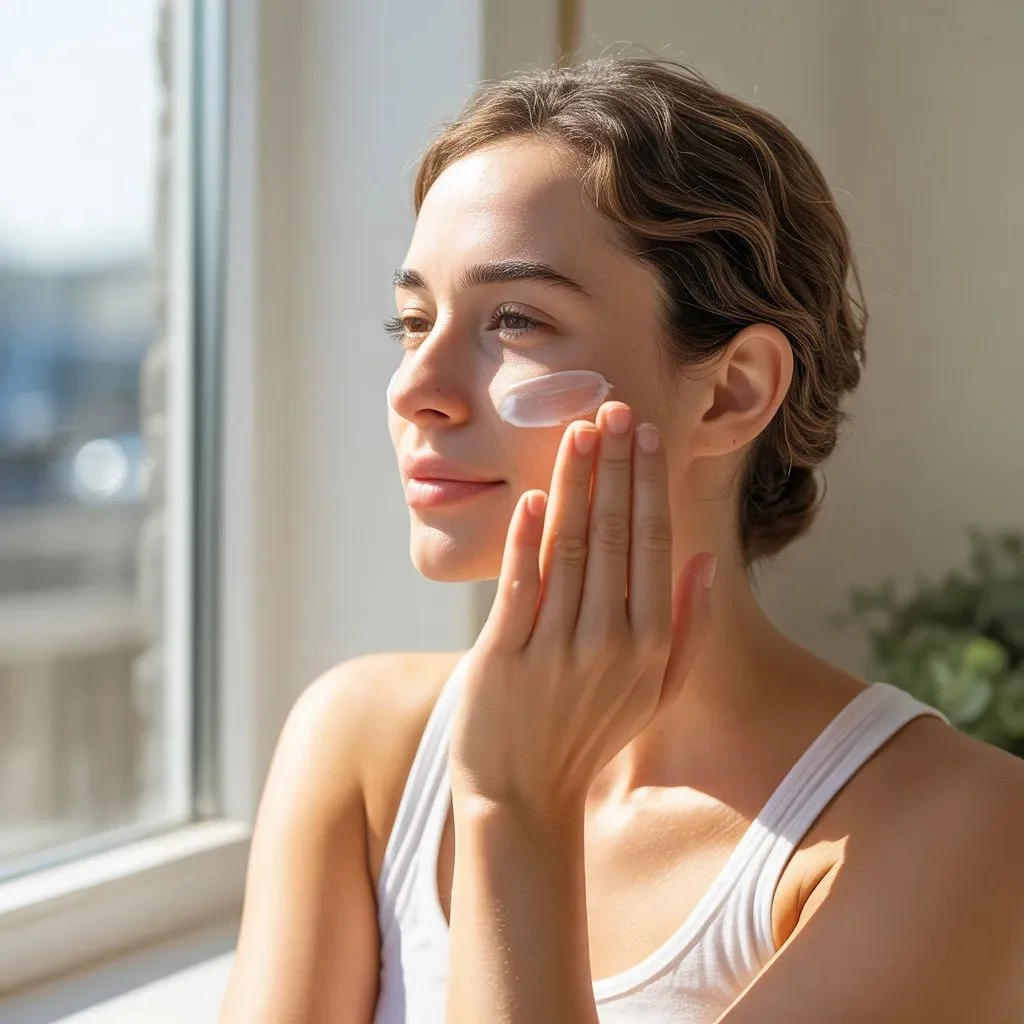
In the morning, a Non-Toxic Skin Care Routine should protect your skin, not challenge it. Start with the mindset that your face is not dirty enough to need aggressive treatment first thing in the day.
1. Cleanse gently. Use a gentle, non-abrasive cleanser that does not contain alcohol. Wash with lukewarm water, use your fingertips instead of scrub tools, and avoid rubbing hard. AAD also recommends washing no more than twice a day and after heavy sweating.
2. Moisturize while skin is still slightly damp. This step helps trap water in the skin. AAD and the NHS both note that moisturizers or emollients work best right after washing or bathing, when the skin most needs moisture. Creams and ointments are often better than thin lotions for dry, reactive skin.
3. Finish with sunscreen. Dermatologists recommend broad-spectrum, water-resistant sunscreen with SPF 30 or higher. For sensitive skin, mineral sunscreens with zinc oxide or titanium dioxide are often preferred because AAD specifically recommends physical sunscreens for people with sensitive skin.
A simple morning like this may feel almost too basic, but that is often the point. Sensitive skin usually improves when it is no longer being “worked on” all the time. If your skin tends to sting, burn, or flush, consistency matters more than quantity. One gentle product used daily is usually better than five exciting ones used with crossed fingers.
Your night steps
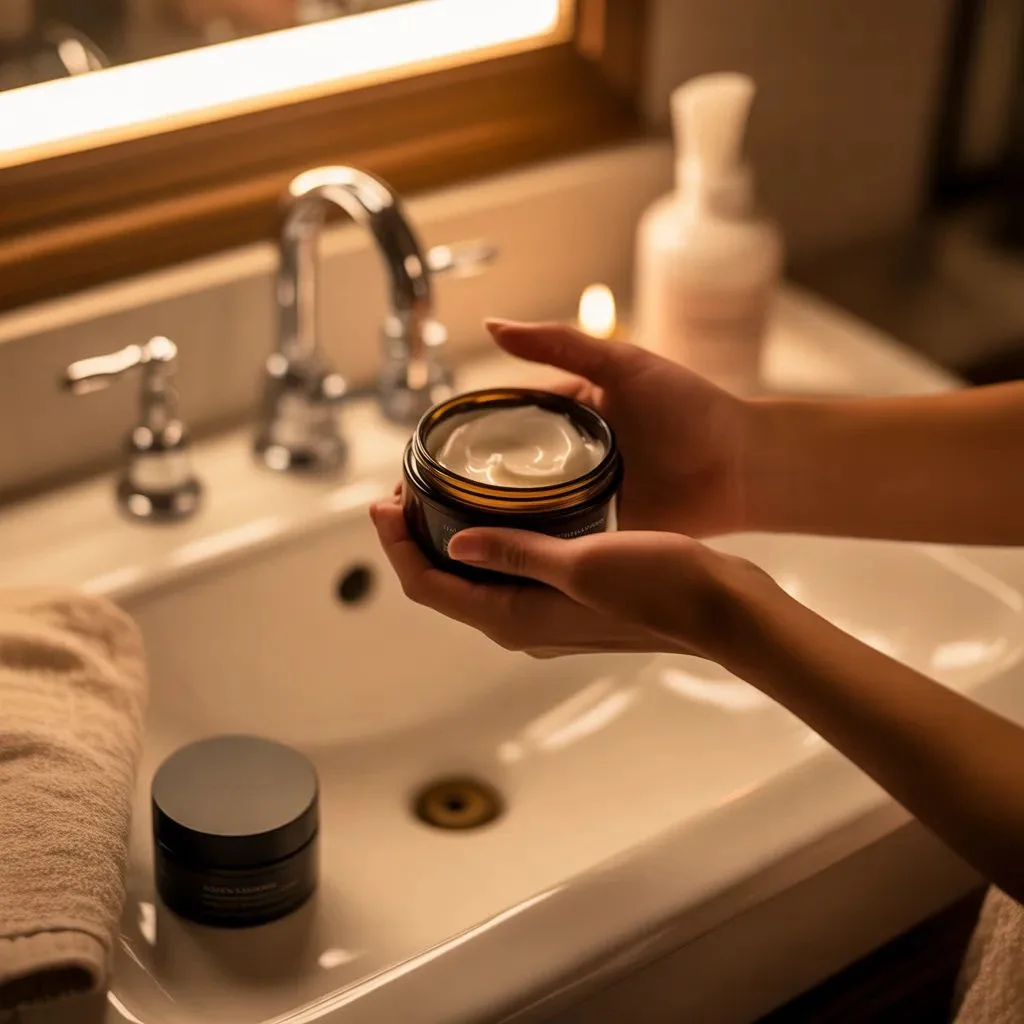
At night, your Non Toxic Skin Care Routine should help your skin recover from the day. This is when you remove sunscreen, sweat, makeup, and city grime without turning cleansing into punishment.
Start with a gentle cleanse. If you wear makeup or heavy sunscreen, take your time, but keep the process soft. Use fingertips, lukewarm water, and no rough tools. After cleansing, pat dry with a soft towel instead of rubbing. Then go straight to moisturizer. If your skin is dry, itchy, or flaky, this step is not optional. It is the repair step that helps your skin feel normal again.
This is also where many people make mistakes. They add exfoliating acids, retinoids, acne treatments, and strong serums all at once because they want faster results. AAD warns that products like retinoids, retinol, and benzoyl peroxide can make skin more sensitive, and exfoliating while using them can worsen dryness and irritation. For dry or sensitive skin, mechanical scrubs may be too harsh, and over-exfoliation can leave skin red and irritated.
So, if you want one “extra” step at night, choose caution. Add only one new treatment at a time, use it sparingly at first, and stop if your skin starts sending distress signals. Healthy skin rarely gets better by being pushed harder. It usually gets better when the barrier is calm enough to do its job.
Ingredients and habits that often cause trouble
The biggest troublemaker for many people with sensitive skin is fragrance. AAD recommends fragrance-free products for dry, sensitive skin, and the FDA says some fragrance components can cause allergic reactions or sensitivities. AAD also points out that “unscented” is not the same as fragrance-free because unscented products may still contain chemicals that hide odor and can irritate skin.
The next common problem is overdoing exfoliation. If your skin already feels tight, hot, itchy, or shiny in a bad way, it is probably asking for less, not more. AAD says dry, sensitive skin may prefer very mild exfoliation, and even then, it should be gentle, not frequent, and followed by moisturizer. Strong scrubs, rough brushes, and stacking acids with retinoids are often a fast path to a flare.
Alcohol-heavy products and astringents can also dry out reactive skin. AAD includes alcohol, fragrance, and retinoids on its list of things that can worsen very dry skin, and dermatologists advise avoiding products with alcohol, alpha-hydroxy acid, and fragrance when you are trying to hold on to moisture. In real life, that means your toner might be the problem, not the solution.
How to add new products without upsetting your face
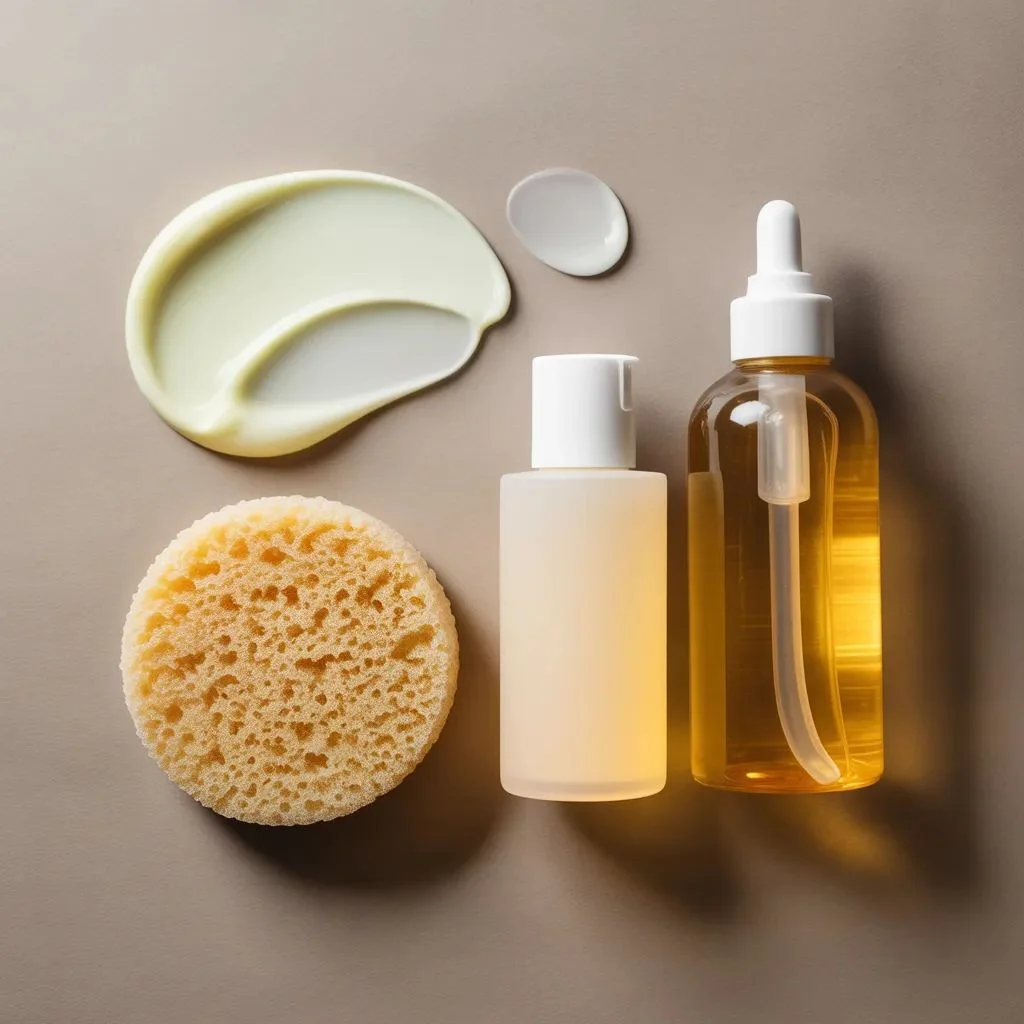
The safest Non-Toxic Skin Care Routine is one you build slowly. AAD recommends testing a new product on a small area of skin twice a day for seven to ten days. Use a quarter-sized spot on the underside of your arm or the bend of your elbow and apply the same amount you would normally use. If it is a wash-off product like a cleanser, leave it on for about five minutes or follow the label directions. If you get redness, itching, swelling, or irritation, stop using it.
This step sounds small, but it saves people from a lot of regret. It is much easier to deal with one itchy patch on your arm than a full-face reaction before work, school, or an event. And if your skin reacts even after careful patch testing, that is useful information too. It tells you the product is not for you, no matter how viral it is.
If you cannot figure out what keeps triggering your skin, a dermatologist can help. AAD notes that allergic contact dermatitis can come from ingredients like preservatives, and medical patch testing may be needed when the trigger is hard to identify. The FDA also advises reading ingredient panels carefully and avoiding ingredients you already know or suspect you are allergic to.

When your skin needs more than a basic routine
Sometimes a gentle routine helps, but not enough. If your skin stays red, itchy, flaky, swollen, or painful even after you simplify everything, there may be more going on than “sensitive skin.” Persistent dryness and irritation can be linked to conditions like atopic dermatitis or contact dermatitis, and AAD advises seeing a dermatologist if dry skin continues despite basic care.
You should also get extra help if products burn almost every time you use them, if rashes keep coming back in the same spots, or if your skin reacts to many unrelated products. That pattern can point to an ingredient allergy, not just a weak barrier. A dermatologist can help identify triggers and tell you whether your skin needs prescription treatment, patch testing, or a different routine altogether.
The good news is that sensitive skin often gets easier to manage once you stop treating it like a project and start treating it like something that needs stability. The best Non-Toxic Skin Care Routine for sensitive skin is usually simple, quiet, and steady. No drama. No stinging. No daily gamble. Just products your skin can trust.
Recommended: Benefits of a Skin Care Routine And Why It Is Worth The Effort.
Quick answers people often need
Is fragrance-free better than unscented for sensitive skin?
Usually, yes. AAD says fragrance-free is the better choice for dry, sensitive skin, and “unscented” products can still contain chemicals that mask odor and may irritate skin.
Can I exfoliate if I have sensitive skin?
Maybe, but keep it light and not too often. AAD says dry and sensitive skin may find mechanical exfoliation too irritating, and over-exfoliation can leave skin red and irritated.
Do I really need sunscreen every day?
If you will be outside, yes. AAD recommends broad-spectrum, water-resistant SPF 30 or higher, and notes that UV rays reach skin year-round, even on cloudy days.
How long should I patch test a new product?
AAD recommends twice daily for seven to ten days on a small test spot before using it more widely.